Canada Suspends Black Hawk Helicopter Purchase: 16 US-Made UH-60Ms for Special Forces Frozen Amid Trump Trade Tensions
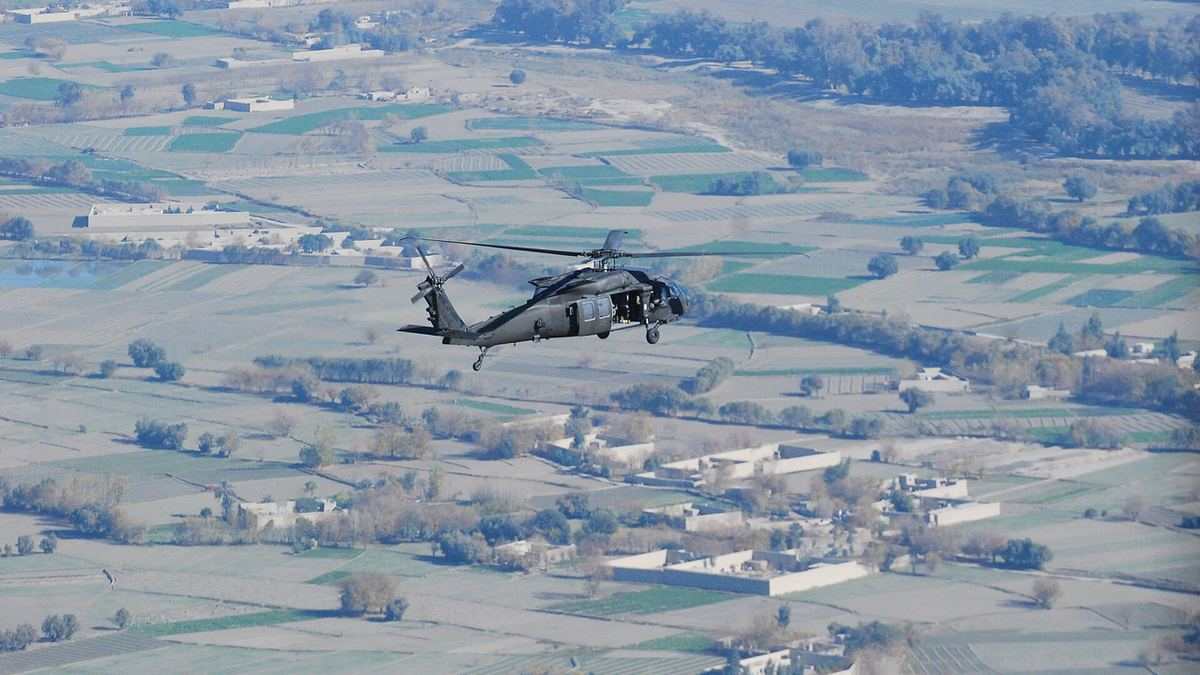
Sixteen helicopters. A signed-off deal from Washington already in hand. And then — Ottawa quietly pulled the plug. On Wednesday, CBC News and Radio-Canada reported that the federal government has suspended Canada's planned purchase of 16 American-built UH-60M Black Hawk helicopters for its special forces.
The pause didn't come with a press conference. CBC's reporting, by Murray Brewster and Daniel Leblanc, says the government ordered the halt just before trade talks with the Trump administration began last summer — and kept it quiet until now.
I keep coming back to one detail: this deal was basically done. It had already cleared the U.S. State Department agency responsible for foreign military sales, with only congressional notification left. Ottawa froze it right there, ahead of a Canadian-U.S. trade meeting in Washington.
What Ottawa froze: 16 UH-60Ms for Petawawa's special forces
The aircraft in question are the UH-60M variant of Sikorsky's Black Hawk, built by Lockheed Martin's subsidiary. They were destined for 427 Special Operations Aviation Squadron in Petawawa, Ontario, to replace aging CH-146 Griffons.
The Black Hawks were the first tranche of something bigger: the next Tactical Aviation Capability Set (nTACS), a three-phase program to replace the entire RCAF Griffon fleet. So this pause stalls more than 16 aircraft — it stalls a fleet-wide renewal.
Here's where it stings for the military planners: the Griffons aren't getting any younger, and the Black Hawk was the known quantity — a combat radius of about 595 kilometres, extendable with aerial refuelling, well suited to Canada's vast operating territory, including the Arctic.
Why the pause: trade war meets defence procurement
CBC's sources inside government and the defence industry point to trade and diplomatic tensions with Washington — consistent with everything else we've seen: failed trade talks, Trump questioning Canadian sovereignty, tariffs of up to 50% on steel, aluminum and autos.
Enjoyed this guide?
Canada Pulse is an independent publication. Every guide is researched, written and carefully edited, and kept free forever. If this saved you time or made your life easier, please don't let the effort go unnoticed — support our work with whatever you can, from $1 upward. Every dollar keeps the guides coming.
💛 Donate via PayPalThere's a second reason, and it's arguably the more important one. According to CBC, the suspension is part of a wider federal effort to inventory every piece of military kit Canada planned to buy from the United States. A sole-source American buy in the middle of a tariff war would have been a hard sell politically. Optics matter, and Ottawa knew it.
A Lockheed Martin spokesperson told CBC the company remains willing to work with Canada. On the Canadian side, Sofia Sapega, spokesperson for the parliamentary secretary for military procurement, said the government continues to consider options to meet special operations forces' needs.
Who fills the gap: Airbus, Leonardo and a made-in-Canada pitch
If the sole-source American route is dead, Europe is already circling. At CANSEC 2026 in late May, Airbus demonstrated its H145M and H175M platforms for all three nTACS phases, including the special-operations role. Leonardo would likely offer its AW249 and AW149 if an open competition were held.
Airbus is playing that card hard. At a recent briefing in France, Airbus Helicopters CEO Matthieu Louvot said the H175M could be manufactured in Canada if selected — it already runs on Canadian-built Pratt & Whitney Canada PT6C-67E engines with landing gear made here. That's the pitch Carney's government wants to hear: the Prime Minister has said plainly that Ottawa should build domestic defence production, partner with companies operating in Canada, and only buy directly from abroad when there's no other choice.
The bigger pattern: the F-35 is already on ice
The bigger one: the acquisition of 88 Lockheed Martin F-35A fighter jets, put on hold in March 2025 after the Trump administration started threatening Canadian sovereignty. Carney ordered a formal review; the results still haven't been made public. Options reportedly include staying with the F-35A — the first training squadron stood up at Luke Air Force Base in Arizona this month — or pivoting to a mixed fleet with Saab Gripen Es built in Canada.
Put the two freezes together and the direction is unmistakable: Ottawa is rethinking who Canada buys its weapons from, full stop. The old pattern — Canadian defence dollars flowing south almost automatically — is breaking in real time. For now, 427 Squadron keeps flying its Griffons — and Washington keeps waiting on a deal that may never close.
Sources
- Skies Mag — Report: Canada pauses Black Hawk helicopter purchase amid U.S. trade tensions (Oct 14, 2026)
- Political Press — Ottawa paused the purchase of US-made Black Hawk helicopters (Oct 14, 2026; quoting CBC News / Radio-Canada)
- EuropeSays — Canada puts Black Hawk helicopter purchase on hold amid trade tensions with US
- CBC News and Radio-Canada — exclusive by Murray Brewster and Daniel Leblanc, October 14, 2026 (original reporting on the pause; quoted in the sources above)
- Note: no reputable outlet has published a YouTube video on this story yet — the CBC report is text-only so far, so Sources are provided as links rather than video embeds.
Enjoyed this guide?
Canada Pulse is an independent publication. Every guide is researched, written and carefully edited, and kept free forever. If this saved you time or made your life easier, please don't let the effort go unnoticed — support our work with whatever you can, from $1 upward. Every dollar keeps the guides coming.
💛 Donate via PayPal