HungerCount 2026: Canada's Food Bank Visits Hit a Record 2.35 Million a Month — and 1 in 5 Users Has a Job
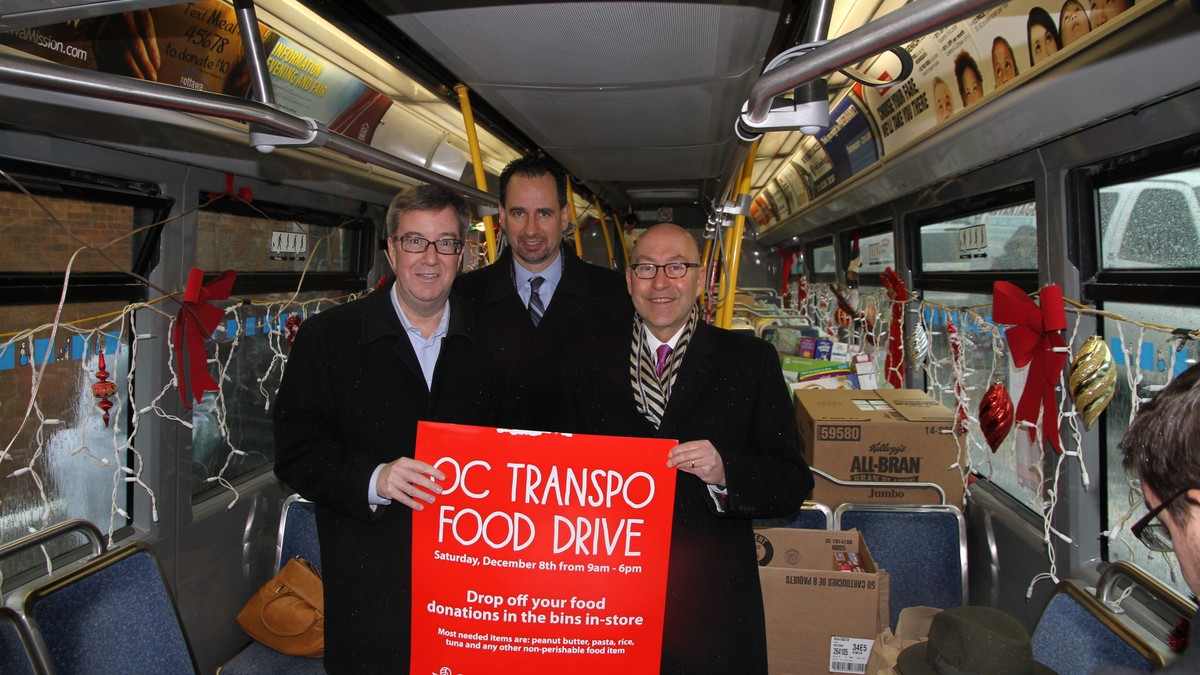
Photo: OC Transpo/Loblaw's Annual Christmas Food Drive in Ottawa — US Embassy Canada / Wikimedia Commons (CC BY 2.0).
Here's a number that should stop you in your tracks: 2.35 million. That's how many times, in a single month, someone in Canada walked into a food bank asking for food. Not in a year — in a month. Food Banks Canada released its annual HungerCount report this morning, October 21, and the headline figure is the highest the survey has ever recorded.
HungerCount is the only national survey of food banks and meal programs in the country, pulling together reports from more than 5,500 food banks and community organizations using March 2026 as the snapshot month. Visits were up 8.7 per cent over 2025 — and a staggering 117 per cent since 2019. Food bank use has more than doubled in seven years.
"HungerCount 2026 is the story of what happens when millions of people are out of options," said Kirstin Beardsley, CEO of Food Banks Canada. "In the past, most people in Canada could absorb a small financial setback — a car repair, a family illness, a modest increase in food prices at the grocery store. Those days are over."
Who's actually in line: one-third are kids
Forget the stereotypes. Nearly one-third of food bank clients — 32.5 per cent — are children under 18. That's close to 776,000 child visits in a single month, more than 400,000 a month above where it stood seven years ago. And the share of two-parent households with kids using food banks has climbed too, from 18.8 per cent in 2019 to 20 per cent this year. These are families with two working-age adults in the house, still not covering the grocery bill.
A kid showing up at a food bank isn't an edge case anymore. It's the single biggest demographic in the system.
Enjoyed this guide?
Canada Pulse is an independent publication. Every guide is researched, written and carefully edited, and kept free forever. If this saved you time or made your life easier, please don't let the effort go unnoticed — support our work with whatever you can, from $1 upward. Every dollar keeps the guides coming.
💛 Donate via PayPalNearly one in five food bank users has a job
This is the stat that ought to make every politician uncomfortable. Almost 18 per cent of food bank clients — 17.9 per cent, to be exact — report employment as their main source of income. In 2019, that figure sat around 12 per cent. Nearly one in five people standing in a food bank line is going to work.
Wages are losing the fight against the basics. About 72 per cent of clients live in market-rent housing, and the lowest-income households now hand over roughly 60 per cent of their disposable income just to keep a roof up. Since 2021, according to the report, food prices have climbed about 30 per cent, housing costs 28 per cent, and transportation nearly 24 per cent. When rent eats three-fifths of what you bring home, the fridge is what gives.
The map of hunger: province by province
Ontario logged the heaviest load — 846,724 monthly visits, up 10.9 per cent on the year and 149.3 per cent since 2019. Quebec followed with 785,889 visits, up 5.3 per cent. British Columbia jumped 14 per cent to 250,505. Alberta's climb is the steepest of any major province: 230,196 visits, up 9.3 per cent in a year and 156.3 per cent since 2019. Yukon rose 24.2 per cent and the Northwest Territories/Nunavut 29.1 per cent — the fastest growth anywhere, in places where groceries already cost multiples of southern prices.
What Food Banks Canada is demanding from Ottawa
The report doesn't just count visits — it lays out a policy punch list. Permanently modernize Employment Insurance so it covers gig workers, part-timers and people who burn through benefits without finding work. Double the Canada Workers Benefit and raise the eligibility threshold to the poverty line. Strip the barriers around the Disability Tax Credit. Run a joint parliamentary review of social assistance adequacy.
There's a housing plank too — a National Housing Accord to build deeply affordable, co-operative and non-profit housing — and a $500-million Food-Link Fund for the cold-chain trucks, warehouses and shelves that let food banks move their donated food. For the North, the report calls for closing the cost-of-living gap in the Canada Groceries and Essentials Benefit and giving Nutrition North Canada real affordability targets.
"This does not have to be Canada's story," Beardsley said. Here's my honest read: we say "record" every year this report comes out. If the numbers keep setting records, food banks have stopped being an emergency backstop. They're becoming the system itself — a second welfare state we never debated and never funded on purpose. That's the conversation this report should force, and it's long overdue.
Sources
- Food Banks Canada — "Canada's 2026 HungerCount finds millions of people in Canada face impossible trade-offs" (Oct 21, 2026)
- Food Banks Canada — HungerCount 2026 overall findings
- CP24 — "Canadian food banks see record-high 2.35 million visits each month, report says"
Enjoyed this guide?
Canada Pulse is an independent publication. Every guide is researched, written and carefully edited, and kept free forever. If this saved you time or made your life easier, please don't let the effort go unnoticed — support our work with whatever you can, from $1 upward. Every dollar keeps the guides coming.
💛 Donate via PayPal