Canada's Factories Just Slipped Into Contraction for the First Time in 2026 — and Prices Are Still Climbing
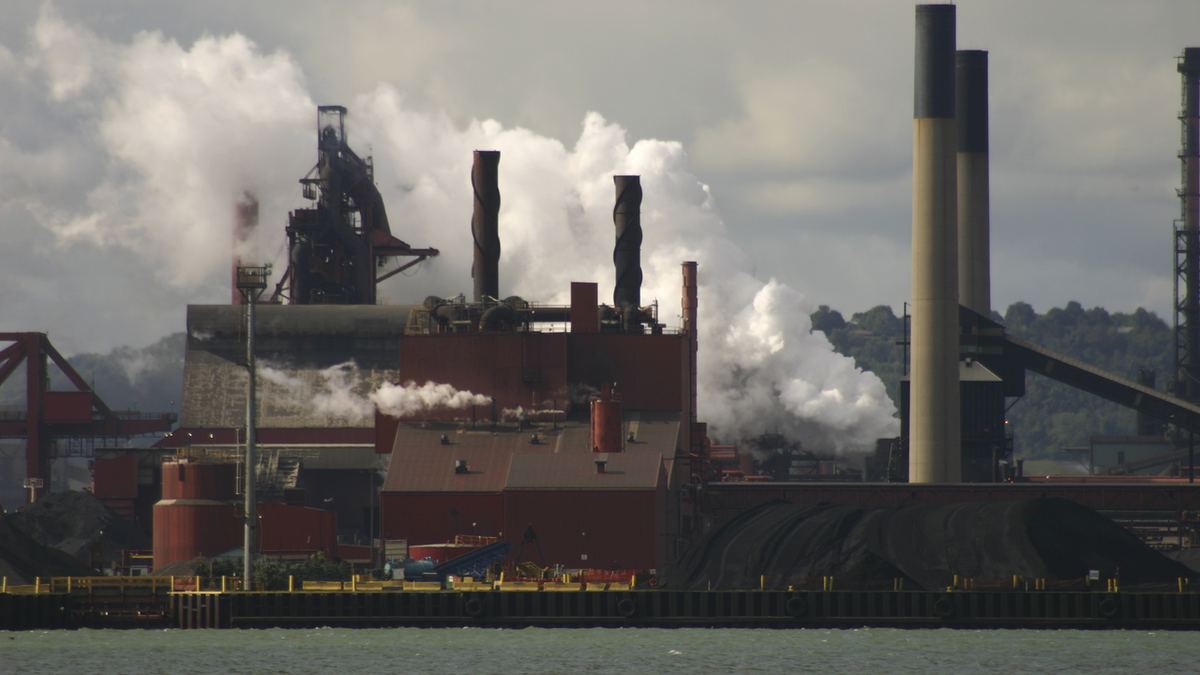
File photo: the ArcelorMittal Dofasco steel plant in Hamilton, Ontario, one of the tariff-hit mills at the centre of Canada's manufacturing slowdown. This is an archive image, not a photo of the October 2026 survey. Photo: Martin Cathrae, CC BY-SA 2.0, via Wikimedia Commons.
For most of this year, Canadian factories had a quiet answer for everyone predicting a tariff recession: the orders kept coming. That answer ran out in October. S&P Global's Canada Manufacturing Purchasing Managers' Index fell to 49.6 last month from 51.5 in September, according to Reuters, slipping below the 50 line that separates growth from contraction for the first time since December. It was the survey's third straight monthly decline, and it arrived with the worst possible companion — prices still racing upward.
"Having enjoyed an uninterrupted run of solid growth throughout 2026 so far, Canada's manufacturing sector ran out of steam in October," Paul Smith, economics director at S&P Global Market Intelligence, said in a statement carried by Reuters. Firms reported drops in output and new orders at the same time, against what Smith called "tariffs and ongoing supply-side disruption." Read that twice, because it matters: this was not one weak corner of the survey. It was the whole machine slowing at once.
Orders dried up first — and foreign buyers went quietest of all
The details underneath the headline are uglier than the headline itself. The output index fell to 48.4 from 50.8 in September, its first decline since March, according to Reuters. New orders sank to 46.5 from 49.3 — the weakest reading since September 2025, and the steepest contraction in more than a year, according to The Wall Street Journal's account of the survey. When customers stop placing orders, factories do not slow down next quarter. They slow down now.
Export orders told the sharpest version of the story. They fell for a fifth consecutive month, and by the most since January, according to S&P Global's release. That fits exactly what you would expect from a summer in which Washington imposed 50 per cent tariffs on a wide range of Canadian goods in August and Ottawa answered with retaliatory duties of its own. Two-thirds of the pain in Canadian manufacturing has always travelled through the border, and the border has been a mess since August.
Supply chains piled on. Average lead times for the delivery of inputs lengthened to the greatest degree since August 2022, according to Reuters, as tariffs and global conflicts contributed to shortages and disruption. Manufacturers leaned on stock they already had: inventories of purchases fell for a second straight month. And employment fell too, for the first time since March — a small move in one survey, but the kind of move that tends to show up in payroll data a month or two later.
Enjoyed this guide?
Canada Pulse is an independent publication. Every guide is researched, written and carefully edited, and kept free forever. If this saved you time or made your life easier, please don't let the effort go unnoticed — support our work with whatever you can, from $1 upward. Every dollar keeps the guides coming.
💛 Donate via PayPalThe nasty twist: shrinking output, rising prices
Here is the part that should worry anyone hoping for quick relief from the Bank of Canada. Input costs and output prices both rose to their highest levels in more than four years, hitting 71.7 and 62.3 respectively, according to Reuters. Input cost inflation was the fastest since June 2022, with companies again pointing to tariffs as the driver, The Wall Street Journal reported. Factories are producing less, selling less — and paying more for everything they touch.
That combination boxes in the central bank. Just last Wednesday, the Bank of Canada raised its benchmark rate by 25 basis points to 2.50 per cent and said further increases might be needed to prevent soaring energy costs from feeding broader inflation, according to Reuters. A rate hike into a manufacturing contraction is not a mistake; it is a sign of how uncomfortable the inflation side of this report really is. The Bank is choosing to fight prices even as factory floors go quiet.
What it means for the wider economy — and for workers
Zoom out and October's factory slump fits a cooling picture. An early estimate showed gross domestic product contracted 0.1 per cent in September from the month before, The Wall Street Journal reported, putting the economy on track for annualized growth of about 1.3 per cent in the third quarter — short of the roughly 2 per cent pace the Bank of Canada had forecast. Manufacturing and oil and gas extraction dragged, partly offset by utilities and wholesale trade.
None of this means a recession is a certainty. One month below 50, at 49.6, is what S&P Global itself called a "marginal deterioration" — a stall, not a collapse. Ottawa and Ontario unveiled an industrial support plan worth about $8.7 billion on October 21 aimed at steel, autos and critical minerals, and formal Canada-U.S. trade talks are expected to resume within days after the weekend's Carney-Trump call. If those talks produce real tariff relief, orders could come back fast. But if they drag, October may be remembered as the month the tariff war stopped being a headline and started being a paycheque problem. For the factory towns of Ontario and Quebec, that distinction is everything.
Sources
Reuters, "Canadian factory PMI shows sector contracting for first time in 2026," November 2, 2026; The Wall Street Journal, "Canada Manufacturing Sector PMI Slips Into Contraction Territory," November 2, 2026; S&P Global Canada Manufacturing PMI release, October 2026, as reported by TradingView News, November 2, 2026. Related video coverage: CBC News, "Canada unveils $7.5B in tariff support for workers, businesses" (https://www.youtube.com/shorts/NI_VUSN9ZK4). No story-specific video from a reputable outlet covering the October PMI release itself had been published at the time of writing, so no video is embedded in this article.
Enjoyed this guide?
Canada Pulse is an independent publication. Every guide is researched, written and carefully edited, and kept free forever. If this saved you time or made your life easier, please don't let the effort go unnoticed — support our work with whatever you can, from $1 upward. Every dollar keeps the guides coming.
💛 Donate via PayPal