Carney Calls Trump and Zelenskyy in One Day: Canada Backs Energy Ceasefire, Pledges Max Oil and Diesel Exports to the US
It was a Thanksgiving Sunday of political whiplash. Within 28 minutes on October 11, Prime Minister Mark Carney's office put out two statements — one thanking Donald Trump for his "leadership" toward a Russia-Ukraine energy ceasefire, and one warning Volodymyr Zelenskyy that the U.S. president's new diesel deal with Moscow was "in direct opposition" to the fight for peace in Europe.
The two calls, placed just hours apart, put Canada squarely in the middle of the weekend's biggest geopolitical story: Trump's surprise announcement of an "energy ceasefire" between Russia and Ukraine, a truce neither side has confirmed — and one that Russia appears to have already violated, according to Kyiv.
Carney's call with Trump: what Canada pledged
According to the official readout published by the Prime Minister's Office, Carney spoke with Trump on Sunday and thanked him for his leadership toward securing the energy ceasefire, expressing Canada's "strong support for this agreement" and repeating Zelenskyy's call for Russia to uphold it.
The statement said it was "imperative that all attacks on energy infrastructure and civilians cease immediately," and added that Canada would keep standing with Ukraine's defences — while pledging to "maximise our exports of oil and diesel to the United States that yield well over a million barrels of diesel per day."
That export pledge is the part with the biggest direct stakes for Canada. By tying maximum energy exports to the ceasefire, Ottawa is offering Washington guaranteed Canadian supply at a moment when diesel prices are politically toxic ahead of the U.S. midterms.
Trump had announced the ceasefire that morning on Truth Social, writing that it was "effective immediately" and that both sides had agreed. But there was no word from Moscow, and Zelenskyy told Axios the announcement was "news to me," though he said Kyiv would accept a ceasefire if Russia did.
The call with Zelenskyy: Carney slams the U.S.-Russia diesel deal
The contrast came in Carney's earlier call with the Ukrainian president, described in a separate PMO release issued the same afternoon. According to that readout, the two leaders discussed the new agreement between the United States and Russia to supply millions of tonnes of diesel to the U.S. — and Carney "was clear" that this agreement "is in direct opposition to the efforts of Ukraine, Canada, and our allies to create peace and stability in Europe."
The release added that the deal "will provide additional revenue for Russia and help finance its illegal, unjustifiable war against Ukraine" — some of the bluntest language a Canadian prime minister has used about a U.S. president's move in recent memory.
Trump had unveiled the diesel deal on Friday, pairing it with a temporary easing of U.S. sanctions on Russian diesel. Zelenskyy called it a "disgraceful" decision, and on Sunday, seven U.S. senators — four of them Republicans — said the deal was illegal under a 2022 law banning Russian energy imports.
Enjoyed this guide?
Canada Pulse is an independent publication. Every guide is researched, written and carefully edited, and kept free forever. If this saved you time or made your life easier, please don't let the effort go unnoticed — support our work with whatever you can, from $1 upward. Every dollar keeps the guides coming.
💛 Donate via PayPalCarney reaffirmed Canada's record: 3,500+ sanctions on Russia, over $8.5 billion in military aid, $750 million for Ukraine's recovery, plus a new $355 million air-defence package.
What is the Russia-Ukraine energy ceasefire?
An energy ceasefire means both sides stop attacking each other's energy infrastructure — power plants, the grid and refineries. It does not mean the war has ended, and enforcement is the hard part: a similar Trump announcement last month was never confirmed by either side.
This time, a White House official told Axios the proposal may be far narrower — "refinery for refinery," covering only oil refineries, with Russia still only considering it — contradicting Trump's claim both sides had agreed.
Russia has hammered Ukraine's energy infrastructure since 2022; Ukraine has hit back at Russian refineries — strikes Trump blamed for rising diesel prices. Brent crude slipped to $103 after Sunday's announcement as traders priced in easing supply fears.
Zelenskyy says Russia kept striking on Sunday
Ukraine says the bombs kept falling: on Sunday, Zelenskyy reported Russian strikes on several power plants, including one in Kyiv and another in Kharkiv, causing blackouts. "Ukrainian skies have been infested with Russian 'shaheds' all day," he said, referring to the Iranian-designed drones Russia uses extensively.
The rift widened Saturday, when Trump told Zelenskyy he had "better damn well stop" attacking Russian refineries and suggested Ukraine elect a new president. Germany's foreign minister Johann Wadephul responded by pledging Berlin would "very clearly" stay by Ukraine's side.
As for Carney himself, he closed his double-header on X, writing that the energy ceasefire "has the potential to significantly de-escalate the war and protect thousands of civilians from harm and hardship." Now comes the test both leaders named: whether Moscow honours a deal it never confirmed.
Sources
- Prime Minister of Canada — Readout: Carney speaks with President Trump (Oct. 11, 2026)
- Firstpost — Carney, Burnham back Trump's Russia-Ukraine energy ceasefire as Moscow stays silent
- Paul Wells — Carney, Trump, Zelensky: two releases and a tweet
- Le Temps — War in Ukraine: coverage from Oct. 8 to 11, 2026
- Al Jazeera — Trump says Ukraine and Russia agree to 'energy ceasefire'
- OilPrice.com — Trump's Russia-Ukraine Energy Ceasefire May Only Cover Oil Refineries
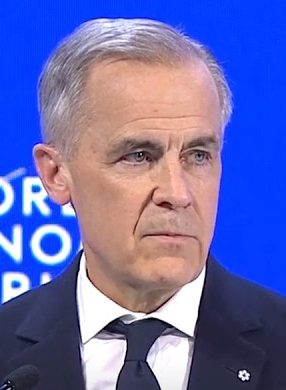
Photo: World Economic Forum / Wikimedia Commons (CC BY 4.0)
Enjoyed this guide?
Canada Pulse is an independent publication. Every guide is researched, written and carefully edited, and kept free forever. If this saved you time or made your life easier, please don't let the effort go unnoticed — support our work with whatever you can, from $1 upward. Every dollar keeps the guides coming.
💛 Donate via PayPal