Chrystia Freeland's 'Unreliable Boyfriend': What Her Trump Book Reveals About Canada's Fight With Washington
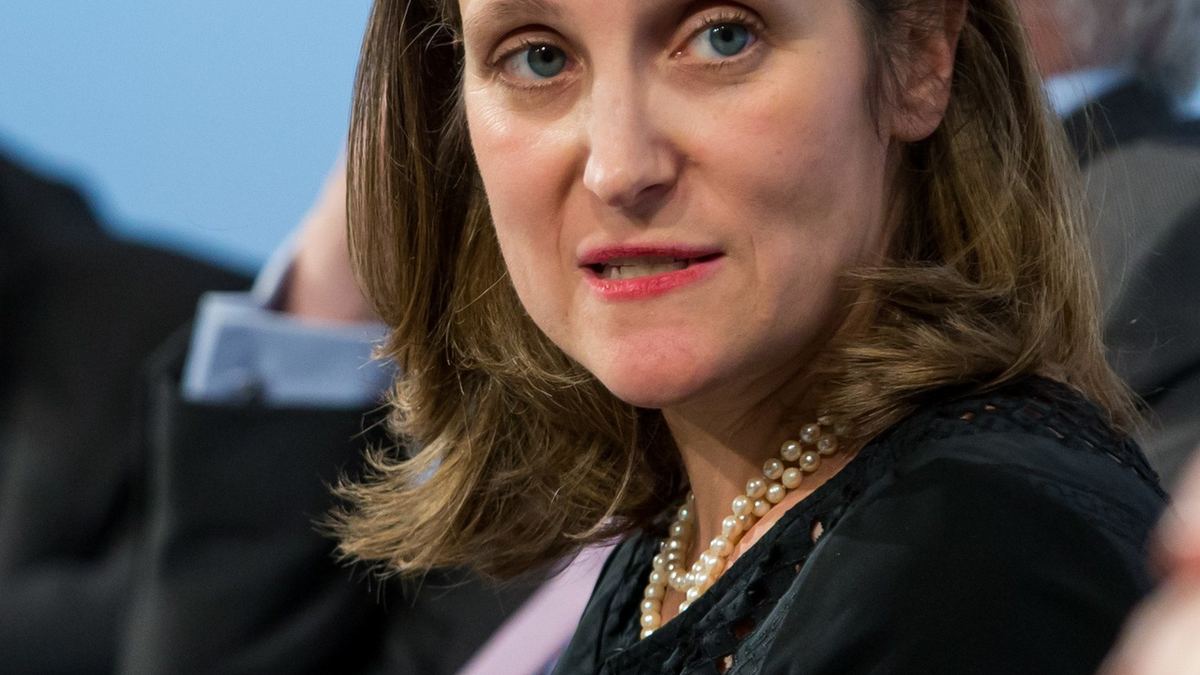
Donald Trump has called her "totally toxic" and a "terrible person." She has called him an existential threat to Canada's future. Now Chrystia Freeland has written the book Trump won't want to read — and its title started life as a joke on late-night television.
Unreliable Boyfriend: An Insider's View of Dealing with a Chaotic Superpower, Plutocrats, and Other Complicated People hit bookstores on Tuesday, October 13, published by Simon & Schuster. The 416-page book is part memoir, part polemic: Freeland's account of negotiating with the United States through the Trump years, and her argument that Canada must stop waiting for Washington to become reliable again.
The title comes from Freeland's own quip on Real Time with Bill Maher in February 2026, when she said the United States under Trump was "not a very reliable boyfriend right now." The line caught on so widely she built the book around it, according to The Canadian Press.
What Freeland says Trump does behind closed doors
The book's most explosive claims concern how the Trump administration treats America's allies in private, according to Bloomberg, which reviewed the book ahead of publication. Freeland writes that the Trump team privately pressures foreign CEOs and business leaders to bring their governments into line with White House demands.
"The Trump team is swaggeringly, rudely aggressive, even behind closed doors," Freeland writes, in passages quoted by Bloomberg. "Trump's Cabinet secretaries miss no opportunity to warn foreign CEOs of the dire consequences if their leaders don't fall in line."
Her central argument is a warning to allies: rewarding Trump's bullying with concessions does not produce results. Governments that give ground, she argues, simply invite the next demand — a pattern repeated across trade fights, security disputes and diplomatic standoffs.
The doughnut strategy: going around the White House
Freeland's answer is what she calls the "doughnut strategy": when the centre of American power is hostile, deal with everything around it. In an excerpt published by The Walrus, drawn from reporting by The Canadian Press, she argues Prime Minister Mark Carney was right to walk away from trade talks with Trump — and that Canada's leverage lies in courting the Americans around the president, not the president himself.
The strategy dates back to the first Trump-era renegotiation of NAFTA. Canada cultivated Congress, governors, mayors, unions, businesses and ordinary Americans, showing them how much their own communities benefited from trade with Canada — building so much support around the president that American domestic interests pushed Washington to moderate.
Freeland led those negotiations as trade minister. In 2017, Trump publicly complained about Canada's negotiator: "We don't like their representative very much." The deal — the USMCA, known in Canada as CUSMA — was signed anyway.
Enjoyed this guide?
Canada Pulse is an independent publication. Every guide is researched, written and carefully edited, and kept free forever. If this saved you time or made your life easier, please don't let the effort go unnoticed — support our work with whatever you can, from $1 upward. Every dollar keeps the guides coming.
💛 Donate via PayPalFrom USMCA to the Trudeau split
Freeland's account spans a decade at the top of Canadian politics. A former foreign correspondent and editor for the Financial Times, Reuters and The Globe and Mail, she entered Parliament in 2013 and served under Justin Trudeau as trade minister, foreign minister, finance minister and deputy prime minister — and wrote two earlier books, Sale of the Century and Plutocrats.
The memoir also revisits her dramatic split from Trudeau in December 2024, when she resigned hours before delivering the fall economic statement — a rupture that hastened the end of Trudeau's leadership. She later rejoined cabinet under Carney, then left Parliament in early 2026 for roles as a Harvard Institute of Politics fellow and unpaid economic adviser to Ukrainian President Volodymyr Zelenskyy.
That vantage point — journalist, negotiator, cabinet minister, now outsider — gives the book its edge, her publisher says. Freeland writes about how deals are really made, how coalitions fracture when governments fail working people, and why trade, security and democracy can no longer be treated as separate files.
Why the book lands now
The timing is no accident: the CUSMA trade pact comes up for formal review next month, and Carney has already ended one round of trade talks with Trump. In a recent interview with The New Yorker's David Remnick, Freeland said the vast majority of Canadians now see the rupture with America as permanent — that America is "toxic and broken and can never be trusted again."
But she calls herself an outlier: Canada should not write America off quite yet. The title leaves the door cracked open, she suggested — you don't call someone an unreliable boyfriend once you've changed the locks. Her prescription is rebuilding: new alliances among democracies, strong enough to resist foreign autocrats and homegrown oligarchs alike.
Whether Ottawa listens may shape the next decade of Canadian foreign policy. Freeland's warning is that the old playbook — patience, concessions, faith the alliance will self-correct — has run its course. Canada's unreliable boyfriend is not going to change, she argues. Canada has to.
Watch and listen: Freeland discusses the book with The New Yorker's David Remnick in The Political Scene podcast, and announced the book in a video post on LinkedIn. No verified video from a major Canadian news outlet about the book release was available at publication time, so no video is embedded.
Sources
- Bloomberg via The Japan Times — Trump threatens CEOs as tactic against allies, Canada's ex-finance minister says
- The Canadian Press — Chrystia Freeland to publish political memoir, 'Unreliable Boyfriend'
- The Walrus / The Canadian Press — Chrystia Freeland: Carney Was Right to End Trade Talks with Trump
- Associated Press — Chrystia Freeland's 'Unreliable Boyfriend' offers front-row seat to US-Canada tensions
- Simon & Schuster Canada — Unreliable Boyfriend, official publisher page
- The New Yorker, The Political Scene — Canada's Plans for Donald Trump (Freeland interview)
File photo: Chrystia Freeland at the Munich Security Conference, 2018. Photo: Hildenbrand / Munich Security Conference, via Wikimedia Commons (CC BY 3.0 DE). (File photo — not from the book launch.)
Enjoyed this guide?
Canada Pulse is an independent publication. Every guide is researched, written and carefully edited, and kept free forever. If this saved you time or made your life easier, please don't let the effort go unnoticed — support our work with whatever you can, from $1 upward. Every dollar keeps the guides coming.
💛 Donate via PayPal