Supreme Court to Hear Emergencies Act Appeal: Freedom Convoy Case Goes to Canada's Top Court
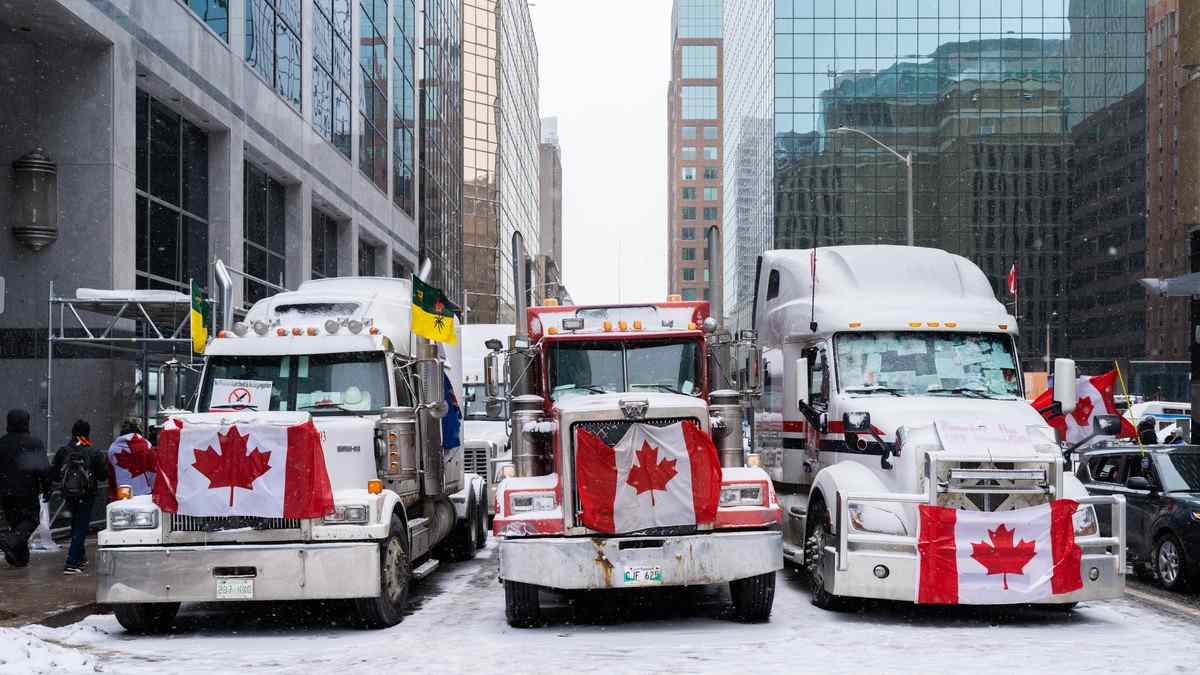
Four and a half years after the trucks finally rolled out of downtown Ottawa, the legal fight over what Justin Trudeau's government did in February 2022 is heading to the highest court in the land. On Thursday, the Supreme Court of Canada announced it will hear the federal government's appeal of two court rulings that found the use of the Emergencies Act against the Freedom Convoy unlawful and unconstitutional — a case that has refused to die, no matter how much political Ottawa wishes it would.
According to reporting by the Canadian Press, published by Global News on Thursday morning, the court's announcement means the Carney government will get its shot at overturning rulings that have so far gone entirely against it. Two lower courts have now told Ottawa the same thing: that invoking emergency powers to break the three-week occupation of the capital — and border blockades at places like Coutts and Windsor — went too far.
What the courts said before
The timeline here matters, because this saga has been grinding along for years. On February 14, 2022, Trudeau invoked the Emergencies Act for the first time in Canadian history, giving police and banks sweeping temporary powers: freezing bank accounts without a court order, designating secure zones, banning participation in the blockades.
In January 2024, Federal Court Justice Richard Mosley ruled the invocation was unreasonable and beyond the authority Parliament had granted — and that the measures unjustifiably violated Canadians' Charter rights to free expression and to be secure against unreasonable search and seizure. Then in January 2026, a three-judge panel of the Federal Court of Appeal unanimously upheld that ruling, finding the government had not shown reasonable grounds to believe a genuine national emergency existed, or that existing laws couldn't handle the situation.
The Carney government then did something a lot of people expected it to quietly skip: on the last possible day in March 2026, it sought leave to appeal to the Supreme Court. Thursday's decision doesn't mean the government won anything — as the Justice Centre for Constitutional Freedoms noted in its statement, granting permission to appeal is not the same as vindication. It just means at least some of the court's judges thought the case raised questions important enough to hear.
The critics aren't impressed
Nobody on the other side of this fight is treating Thursday as neutral news. "We've defeated the federal government twice on this issue and we're ready to do it again," Christine Van Geyn, interim executive director of the Canadian Constitution Foundation, said in a statement after the announcement. The CCF was one of the organizations that challenged the freezing of bank accounts, and Van Geyn accused the government of spending taxpayer money to defend what she called an abuse of power.
John Carpay, president of the Justice Centre for Constitutional Freedoms — which funded lawyers for Edward Cornell and Vincent Gircys, two Canadians whose bank accounts were frozen under the emergency measures — put it this way: "Two courts have already found that the federal government exceeded its legal authority. We are disappointed that Canadians face another stage in this lengthy legal battle, but granting permission to appeal does not vindicate the government's actions."
Enjoyed this guide?
Canada Pulse is an independent publication. Every guide is researched, written and carefully edited, and kept free forever. If this saved you time or made your life easier, please don't let the effort go unnoticed — support our work with whatever you can, from $1 upward. Every dollar keeps the guides coming.
💛 Donate via PayPalThe CCF has said the federal government has spent at least $4 million so far defending its use of the Act, a figure that will only grow now that the case is headed to the country's top court.
Why this still matters in 2026
Here's the thing: this isn't really about the convoy anymore. It's about what any government is allowed to do the next time a protest gets unmanageable. The Emergencies Act was designed for the gravest of crises — war, insurrection, catastrophe. The lower courts said Ottawa stretched it to cover a disruptive, entrenched, deeply unpopular protest, and in doing so crossed lines the Charter draws around expression and property.
Now the Supreme Court gets to decide whether that stretch was legal after all — or whether the two lower courts were right to shut it down. Either way, the decision will become the definitive word on emergency powers in Canada, the case every future government cites the next time it considers reaching for them. No hearing date has been announced yet, and these things move slowly; a final ruling is likely many months away, possibly into 2027.
For Carney, it's an awkward inheritance. He didn't invoke the Act — Trudeau did. But his government chose to keep fighting for it, and on Thursday it bought itself one more round. Whether that was principle or stubbornness depends entirely on which side of the fight you were on in February 2022. The Supreme Court, eventually, will get the last word.
Sources
Enjoyed this guide?
Canada Pulse is an independent publication. Every guide is researched, written and carefully edited, and kept free forever. If this saved you time or made your life easier, please don't let the effort go unnoticed — support our work with whatever you can, from $1 upward. Every dollar keeps the guides coming.
💛 Donate via PayPal