Bank of Canada October 28, 2026 Rate Decision: Will Rates Hold or Rise?

In sixteen days, the Bank of Canada will make the most-watched economic call of the fall. On October 28, 2026, Governor Tiff Macklem and the Governing Council will announce whether the 2.25% policy rate — untouched all year — finally moves. And for once, the experts genuinely can't agree on the direction.
Here's the case for a hold, the case for a hike, and what each outcome means for your mortgage, your savings, and the Canadian economy.
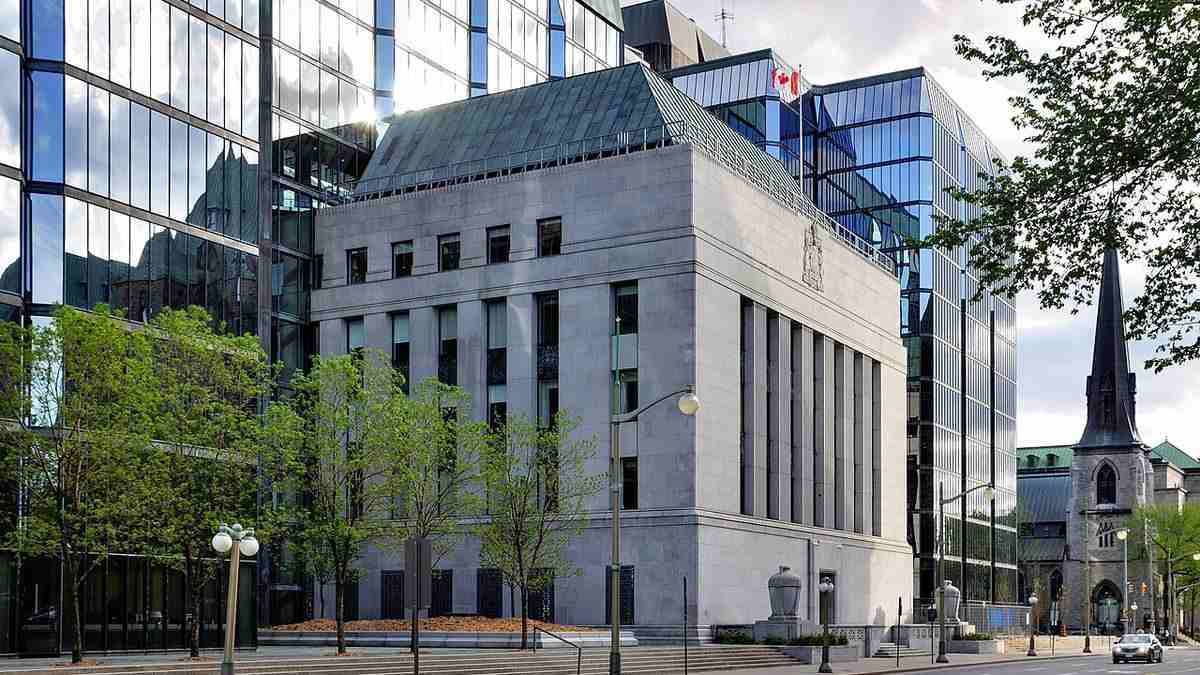
Photo: Wikimedia Commons (CC BY 2.0)
Where Rates Stand Now
The Bank of Canada has held its key policy rate at 2.25% for seven consecutive decisions, stretching back to the October 2025 cut. According to Nesto's mortgage rate analysis, the last increase was July 2023 — more than three years ago, when the rate peaked at 5.00%.
The September 2 decision held rates steady, with the Bank reading the economy "more constructively" than in April. Statistics Canada has since confirmed modest Q2 growth of 1.1%, and the Bank still projects full-year 2026 growth of just 0.7%, rising to 1.8% in 2027 and 2028.
The prime rate most borrowers actually pay sits at 4.45%. Current best mortgage rates, according to Nesto: 4.64% for a 3-year fixed, 4.59% for a 5-year fixed, and 3.41% for a 5-year variable.
The Case for Holding: The September Jobs Shock
Canada's labour market delivered an unexpected blow in September, shedding 68,300 jobs and pushing the national unemployment rate to 6.5%, according to analysis reported by GTA Real Estate Today. It was the second straight month of job losses.
Five of Bay Street's top economists have reached near-unanimous consensus: the Bank will hold on October 28, with rates likely unchanged through year-end. Their reasoning: 70% of September's job losses hit young workers aged 15–24, but broader labour-market softness — combined with U.S. trade-war uncertainty — has created a complex backdrop that argues against tightening.
Enjoyed this guide?
Canada Pulse is an independent publication. Every guide is researched, written and carefully edited, and kept free forever. If this saved you time or made your life easier, please don't let the effort go unnoticed — support our work with whatever you can, from $1 upward. Every dollar keeps the guides coming.
💛 Donate via PayPalCapital Economics, in a report covered by The Canadian Press, argues that trade uncertainty and slowing immigration will limit how far inflation can rise — and therefore how much the Bank can justify hiking. The firm expects the policy rate to reach 2.75% with a pair of quarter-point hikes starting next year, but "resist going further to avoid hampering growth."
The Case for a Hike: Inflation Won't Quit
The counterargument is inflation. August CPI came in at 3.0% year over year — a full point above the Bank's 2% target — driven by gasoline prices up 22.8% amid the war in Iran and high oil prices. Core inflation measures sit near 2.3%, slightly above target.
Financial markets have increasingly shifted toward pricing rate hikes sooner rather than later, according to The Canadian Press, as high oil prices stoke fears of persistent inflation. Perch's October analysis found the market expects one hike before year-end and is pricing more aggressive increases in 2027 than it did a month ago.
A Reuters poll of economists taken in late August — after trade talks collapsed and U.S. tariffs took effect — found all 35 respondents expecting a hold on September 2 and no change for the rest of 2026. But market pricing has moved since, and the October 28 decision comes with a fresh Monetary Policy Report that could reset expectations.
What It Means for Your Mortgage
If the Bank holds — the consensus view — variable mortgage rates stay where they are, and fixed rates keep following bond markets rather than the Bank. For borrowers renewing soon, the practical advice from mortgage watchers: get a rate hold from your lender (typically 90–120 days), which protects you if rates rise while letting you take a lower rate if they fall.
If the Bank hikes — the market's growing fear — variable-rate borrowers would feel it within weeks through the prime rate. Fixed rates have already been drifting higher on bond-market pressure, independent of the Bank's decisions.
Either way, the era of cheap borrowing isn't returning. As Nesto puts it, borrowing costs are unlikely to return to pre-pandemic lows — and rates are now more likely to rise than fall.
Sources
- Nesto — Mortgage Rates Forecast Canada 2026-2030
- GTA Real Estate Today — Bank of Canada Holds Rates as September Jobs Shock Reshapes Outlook
- Advisor.ca — Soft economy should limit Bank of Canada's rate hikes: Capital Economics
- Perch — Canada Interest Rate Forecast 2026-2031
Enjoyed this guide?
Canada Pulse is an independent publication. Every guide is researched, written and carefully edited, and kept free forever. If this saved you time or made your life easier, please don't let the effort go unnoticed — support our work with whatever you can, from $1 upward. Every dollar keeps the guides coming.
💛 Donate via PayPal