Canada-China Canola Deal Extended to 2028: Exports Up 84% as Tariff Relief Holds
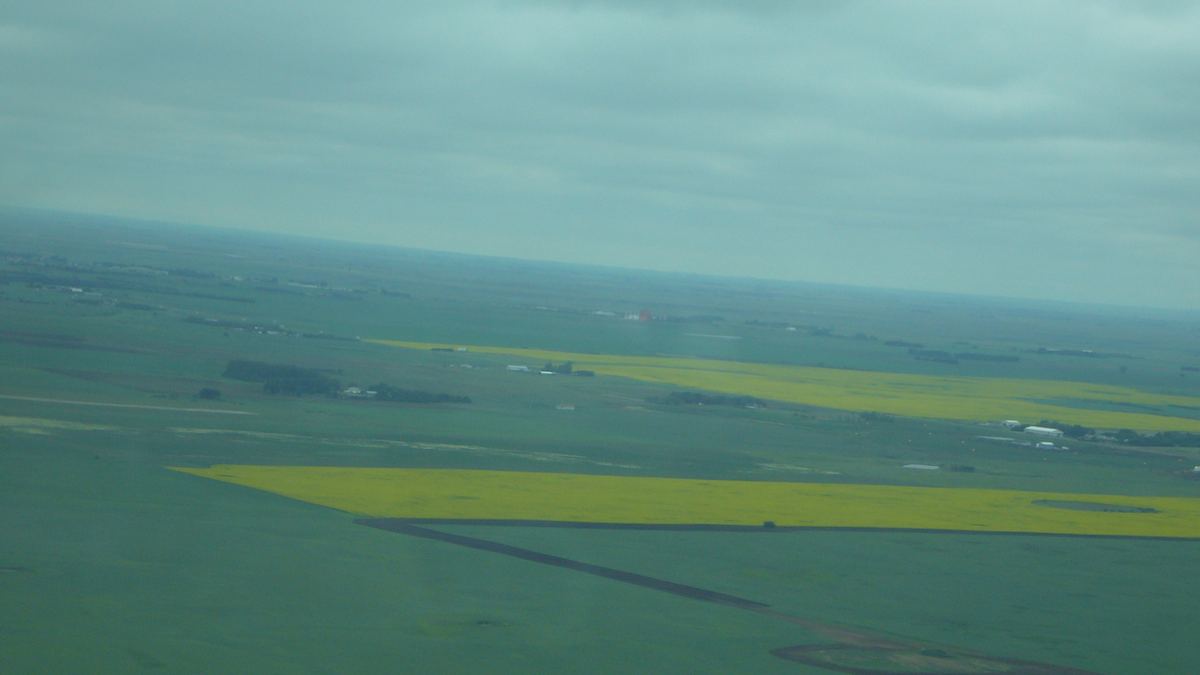
File photo: a canola field in bloom outside Estevan, Saskatchewan. This is an archive image, NOT a photo of the trade announcement. Photo: Jeff Sandquist, CC BY 2.0, via Wikimedia Commons.
If you grow canola on the Prairies, Wednesday brought the news you have been waiting for all year. China has agreed to keep its tariff relief on Canadian canola meal, peas, lobster and crab running until the end of 2028 — two more years of breathing room for farm families and fishing towns that spent the last two years wondering whether their biggest market would slam shut again.
Trade Minister Maninder Sidhu announced the extension on November 4 from Beijing, where he co-chaired the first ministerial-level meeting of the Joint Economic and Trade Commission with China's Commerce Minister Wang Wentao. The deal extends the Preliminary Joint Arrangement struck during Prime Minister Mark Carney's January visit to Beijing — the arrangement that, from March 1, suspended China's extra 100 per cent tariffs on canola meal and peas and its 25 per cent tariffs on lobster and crab. That relief was due to expire on December 31. Now it runs to the end of 2028.
Canola exports to China up 84%: the numbers behind the deal
The numbers Sidhu quoted explain why Ottawa pushed so hard. Since the arrangement took effect in March, Canadian canola seed exports to China have jumped 84 per cent, from $1.04 billion to $1.91 billion compared with the same period last year, according to the minister. Canola meal exports more than doubled, from $146 million to $390 million. Pea exports climbed from $107 million to $345 million, and lobster from $128 million to $200 million.
Pulse Canada, the industry group for pea and lentil growers, says the March-to-September window alone saw more than 975,000 tonnes of Canadian peas shipped to China. Sidhu said the arrangement supports sectors that sustain more than 600,000 jobs across Canada, and the government has set a target of growing exports to China by 50 per cent by 2030.
Enjoyed this guide?
Canada Pulse is an independent publication. Every guide is researched, written and carefully edited, and kept free forever. If this saved you time or made your life easier, please don't let the effort go unnoticed — support our work with whatever you can, from $1 upward. Every dollar keeps the guides coming.
💛 Donate via PayPalWhat Canada gave up: steel and aluminum remission extended
The extension is a two-way street. In return, Canada will keep its remission measures — targeted exemptions from import surtaxes — on certain Chinese steel and aluminum products not made in Canada, also until the end of 2028. Ottawa imposed a 100 per cent surtax on Chinese-made electric vehicles and a 25 per cent surtax on specified Chinese steel and aluminum in October 2024; China hit back in March 2025 with the duties on Canadian farm and seafood goods that the January arrangement began to unwind.
Canola oil still shut out: what the deal does not fix
Not everything is fixed, and farmers should not mistake this for a full reset. Canola oil still faces China's additional 100 per cent tariff, and canola seed still carries a combined rate of about 14.9 per cent — a 5.9 per cent anti-dumping duty set in February plus the regular 9 per cent tariff — according to farm trade reporting. Pork, too, remains outside the relief. The extension buys time; it does not settle the underlying dispute.
That time matters. Two-way merchandise trade between Canada and China reached $125.7 billion in 2025, and Canadian exports to China hit $21.5 billion in the first half of 2026 alone, according to Global Affairs Canada. With the United States still imposing tariffs on a wide range of Canadian goods, Ottawa's push to find buyers beyond the border is no longer a talking point. It is the strategy. The next test comes soon: Carney is scheduled to meet Chinese leader Xi Jinping at the APEC summit in Shenzhen on November 18–19.
What happens next for Canadian farmers
For now, the practical message is simple. A grower in Saskatchewan or a lobster harvester in Nova Scotia can plan the next two seasons knowing the Chinese market stays open on the same terms — no December cliff, no scramble to reroute shipments. The deal is not permanent, and the tariffs it suspends could return if relations sour again. But after a year in which every headline seemed to bring a new duty, two years of certainty is the closest thing to good news Canadian agriculture has had in a long while.
Sources
Global Affairs Canada, November 4, 2026; RealAgriculture, November 4, 2026; Business News (Malaysia), November 5, 2026; Hashtag Investing, November 5, 2026; JKN News, November 5, 2026.
Enjoyed this guide?
Canada Pulse is an independent publication. Every guide is researched, written and carefully edited, and kept free forever. If this saved you time or made your life easier, please don't let the effort go unnoticed — support our work with whatever you can, from $1 upward. Every dollar keeps the guides coming.
💛 Donate via PayPal