Budget 2026: Carney Takes $5 Billion Culture Plan to Montreal — Artists Tax-Free on $45,000, Free Museums for Under-25s
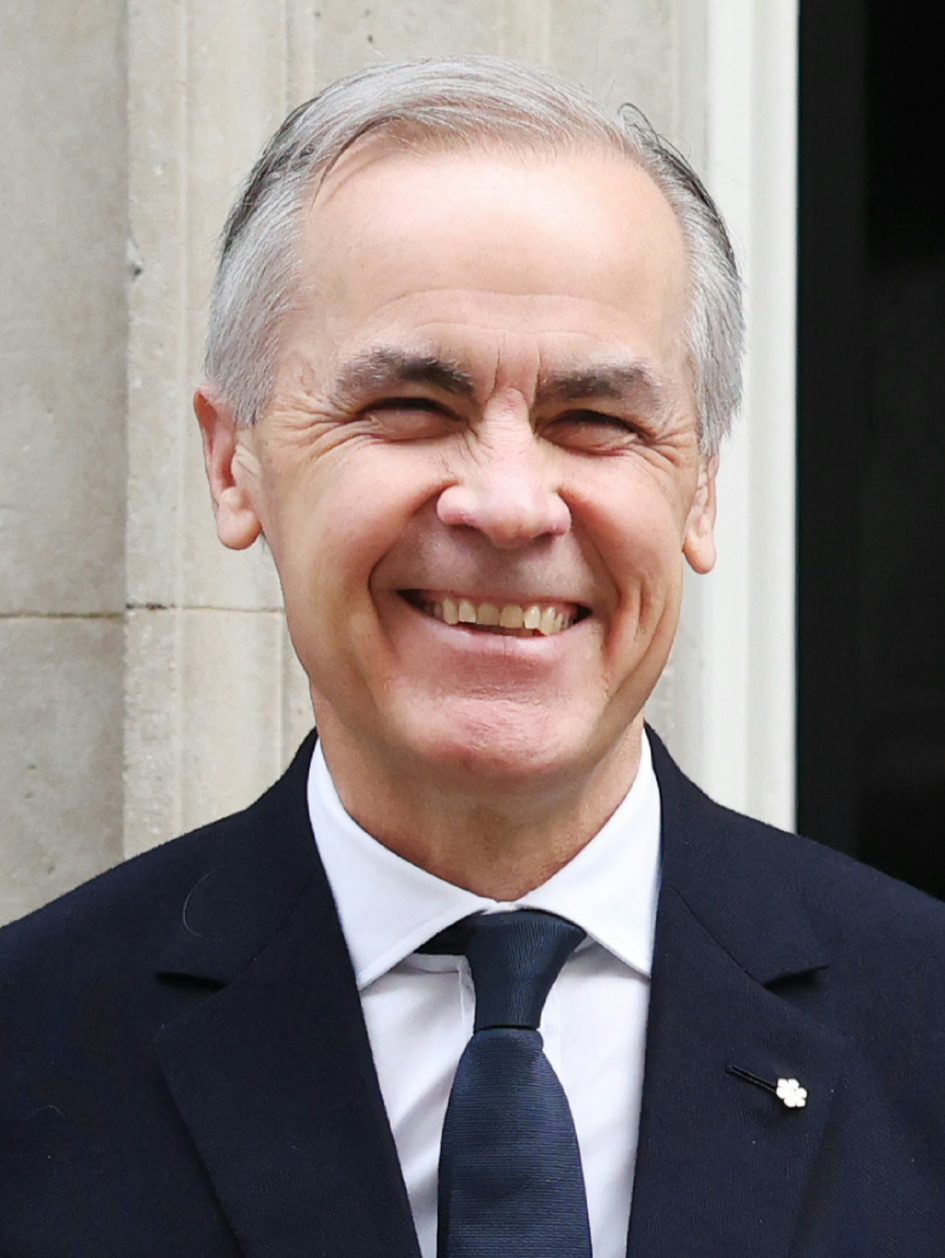
Photo: Simon Dawson / No 10 Downing Street, Open Government Licence v3.0, via Wikimedia Commons — Prime Minister Mark Carney, London, March 16, 2026 (file photo).
If you are a painter in Halifax, a musician in Winnipeg, or a ceramicist in a small town in northern Ontario, the federal budget tabled last week has a number with your name on it: $45,000. That is how much annual income from creative work the Carney government says artists will be able to earn tax-free under Budget 2026. And today, the prime minister is in Montreal to sell the whole package in person.
Carney is spending Tuesday in Montreal with cultural sector leaders, according to the Prime Minister's Office. He hosts a roundtable at 9:40 a.m., tours an arts and culture hub at 10:15 a.m., and delivers remarks at 11:10 a.m., joined by culture minister Marc Miller. Ministers are fanning out across the country with the same message today.
Budget 2026, tabled on November 5 by Finance Minister François-Philippe Champagne, proposes roughly $5 billion over five years for Canadian culture. "Being sovereign means building a country where Canadian culture in all its diversity and creativity thrives," the budget reads.
Artists tax-free on up to $45,000 of creative income
The measure getting the most attention is the new Canada Creative Credit. Carney put it bluntly on social media the day the budget landed: "In Budget 2026, we're backing the Canadian artists who tell our stories. That means if you're a Canadian artist, you won't pay tax on up to $45,000 of income derived from your creative work."
The credit would be a new non-refundable personal income tax credit, and combined with the basic personal amount every filer already gets, artists could have up to $45,000 of annual net business income from original and creative works exempt from tax. The budget names painters, sculptors, ceramicists, writers, musicians and actors among those covered. But the details are not settled yet — the government will consult the sector first, with the fine print coming in the spring 2027 economic update.
Enjoyed this guide?
Canada Pulse is an independent publication. Every guide is researched, written and carefully edited, and kept free forever. If this saved you time or made your life easier, please don't let the effort go unnoticed — support our work with whatever you can, from $1 upward. Every dollar keeps the guides coming.
💛 Donate via PayPalFree museums for under-25s and $1.5 billion for rinks
The package reaches well past working artists. National museums would get $783.1 million over five years, shared with the National Arts Centre, Library and Archives Canada and the National Battlefields Commission, to repair aging buildings and protect collections. Inside that figure sits $46.3 million over five years, plus $11.5 million a year after that, to make admission permanently free for under-25s.
Then there is the money for the places where most Canadians spend their weekends. The budget proposes $1.5 billion over nine years through the Build Communities Strong Fund to build, expand and fix up community recreational facilities and ice rinks — $750 million for rinks and $750 million for other facilities. A further $76 million in 2027-28 would renew the Canada Strong Pass for another summer, and a $300-million Canada 160 Fund would mark the country's 160th anniversary.
What Budget 2026 means for CBC, local news and Canadian content
The news business gets a large slice too. CBC/Radio-Canada is in line for an additional $300 million over two years. The Local Journalism Initiative would receive $134 million over four years and $41 million a year after that. The enhanced 35 per cent Canadian Journalism Labour Tax Credit — a salary subsidy for newsrooms due to expire next month — would run to the end of 2028 and widen to private audio and audiovisual news organizations, at an estimated cost of $501 million over five years. The credit now supports about 7,500 journalist positions, according to the policy blog MediaPolicy.ca.
There is also $600 million in immediate support for creators, producers and broadcasters. That money is a make-good: back in June, Carney scrapped cash levies that foreign streamers such as Netflix and Spotify were supposed to pay into Canadian media funds, worth roughly $200 million a year. The budget does not say how the $600 million will be divided up.
The catch: Budget 2026 still has to pass Parliament
Two caveats belong in any fair reading. First, Budget 2026 has been introduced in the House of Commons and must still be passed to become law. The Liberals hold a majority, so approval is likely, but the measures are proposals until Parliament votes. Second, several of the most eye-catching promises — the artist tax credit above all — are frameworks without final rules.
That is presumably why Carney is in Montreal today rather than leaving the budget to speak for itself. The culture file has been a sore spot: the sector waited five months for the $600 million promised in June, and museums have cut dozens of positions. A budget that puts $5 billion behind Canadian stories is a real shift in tone. Whether it turns into money in artists' pockets depends on what happens after the speeches end — in the consultations, in the spring economic update, and in the votes that follow.
Sources
- Prime Minister's Office — Tuesday, November 10, 2026 itinerary — confirms Carney's Montreal roundtable (9:40 a.m.), arts hub tour (10:15 a.m.) and remarks (11:10 a.m.) with Minister Marc Miller.
- CBC News — Canada's new budget proposes $5B for culture. Here's where it would go — confirms the $5 billion figure, $1.5 billion for rinks and recreation, $783.1 million for museums, $300 million for CBC/Radio-Canada, $134 million for the Local Journalism Initiative, the 35 per cent journalism tax credit extension and the $45,000 artist exemption.
- The Art Newspaper — Canada's proposed federal budget includes tax breaks for artists and $554m funding boost for museums — confirms the Canada Creative Credit details, the $783.1 million museum package, free admission for under-25s and the $20 million Canada Council for the Arts increase.
- PetaPixel — Canadian Photographers Get Huge Tax Break In Proposed Federal Budget — confirms the $45,000 exemption as a non-refundable personal income tax credit, details due in the spring 2027 economic update, and that the budget must still pass Parliament.
- MediaPolicy.ca — Budget 2026 strengthens news funding, cuts CBC dollars, and leaves CanCon hanging — confirms the journalism tax credit now supports about 7,500 positions, the $600 million make-good for scrapped streamer levies, and that the $600 million is not itemized in the budget.
Enjoyed this guide?
Canada Pulse is an independent publication. Every guide is researched, written and carefully edited, and kept free forever. If this saved you time or made your life easier, please don't let the effort go unnoticed — support our work with whatever you can, from $1 upward. Every dollar keeps the guides coming.
💛 Donate via PayPal