China to Sell Yuan Bonds in Canada for the First Time as Top-Level Economic Talks Resume in Vancouver
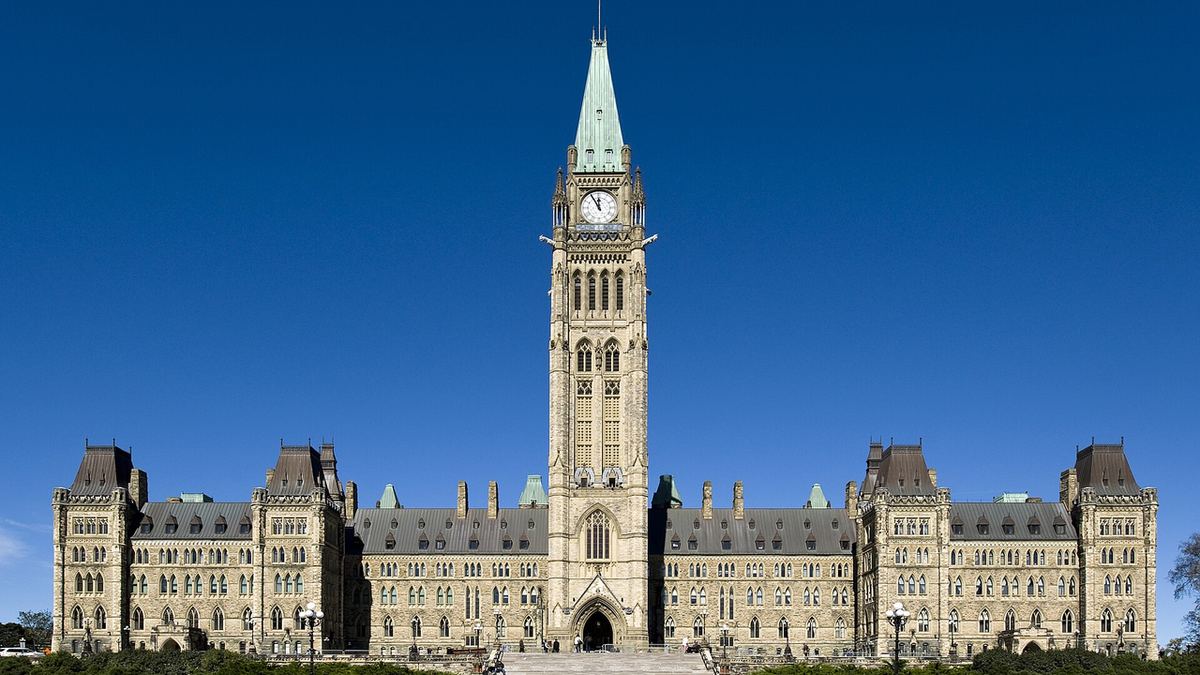
File photo: Centre Block on Parliament Hill in Ottawa. This is an archive image, NOT a photo of the Vancouver talks. Photo: Saffron Blaze, CC BY-SA 3.0, via Wikimedia Commons.
Eight years is a long time to not talk about money. On Monday, in Vancouver, Canada and China finally sat down again — and Beijing brought something it has never offered on Canadian soil before: its own currency, in bond form, for sale to investors here.
China's Ministry of Finance plans to issue up to 4 billion yuan — roughly $600 million — in green sovereign bonds in Canada during the week of November 9, according to the ministry's announcement on November 5. It would be the first time Beijing has sold yuan-denominated government debt outside its usual offshore venues of Hong Kong, Macau and London, according to Bloomberg data. The bonds are "green" in the formal sense: the money raised is earmarked for environmental projects, not general spending.
China yuan bonds in Canada: a first for the currency
For a bond sale, the symbolism matters as much as the size. Four billion yuan is modest by sovereign-debt standards. But the choice of venue is the story. Beijing is testing whether Canadian investors will buy Chinese government debt directly in yuan, and it picked this week, in this country, to do it.
The timing is no accident. The bond sale lands the same week as the second Canada-China Economic and Financial Strategic Dialogue, which takes place in Canada on November 9. Chinese Vice Premier He Lifeng is in Vancouver for the talks, co-chairing with Finance Minister François-Philippe Champagne and International Trade Minister Maninder Sidhu, according to the Department of Finance. Bank of Canada Governor Tiff Macklem and Superintendent of Financial Institutions Peter Routledge are also taking part.
Canada-China economic dialogue returns after eight years
The dialogue itself has been gathering dust. Its first and only previous round was in 2018, before the Meng Wanzhou arrest, the two Michaels, and the years of frozen relations that followed. Reviving it now is the clearest sign yet that both governments want the thaw to have real scaffolding, not just handshakes.
And the scaffolding has been going up fast. Prime Minister Mark Carney visited Beijing in January and announced an updated strategic partnership; Champagne followed in April. Sidhu spent last week in China, co-chairing the first ministerial-level meeting of the Joint Economic and Trade Commission in Beijing on November 3 with Commerce Minister Wang Wentao — the meeting that extended tariff relief on Canadian canola meal, peas, lobster and crab through 2028.
Enjoyed this guide?
Canada Pulse is an independent publication. Every guide is researched, written and carefully edited, and kept free forever. If this saved you time or made your life easier, please don't let the effort go unnoticed — support our work with whatever you can, from $1 upward. Every dollar keeps the guides coming.
💛 Donate via PayPalCCTV Video News Agency on the first ministerial-level Canada-China economic and trade talks in Beijing (Nov. 3, 2026).
What Ottawa wants from the China-Canada reset
Carney was blunt about the direction of travel on Friday in Winnipeg, where he was promoting the federal budget. "We are in discussions with the Chinese about where to next on trade," he told reporters, according to Dow Jones. He added that he will meet Chinese leader Xi Jinping at the APEC summit in Shenzhen on November 18–19.
The numbers explain why Ottawa is pushing. Canadian merchandise exports to China grew 31.4 per cent in the first half of 2026 to $21.5 billion, according to Global Affairs Canada, and the government has set a target of growing exports to China by 50 per cent by 2030.
The risks nobody in Vancouver will say out loud
None of this is risk-free, and the people in the room know it. Canada's trade deficit with China is enormous — $90.6 billion in imports against $35.0 billion in exports last year — and the canola and pork disputes of the last two years showed how quickly Beijing can use market access as leverage. A bond sale and a dialogue do not erase that history.
There is also the Washington factor. Carney's government has spent the year trying to reduce Canada's dependence on the United States while not antagonizing it — a needle that gets harder to thread the closer Ottawa gets to Beijing. A yuan bond issued in Vancouver is exactly the kind of thing that gets noticed south of the border.
Still, for Canadian exporters, the direction is hard to argue with. A Prairie canola grower who can now plan through 2028, a lobster harvester in Nova Scotia with the same certainty, and now a bond market that treats Canada as a serious venue for yuan debt — these are concrete gains, not vibes. The test is whether the Vancouver talks produce anything as tangible as the bond sale itself. If the dialogue ends with pleasant communiqués and no new market access, the skeptics will have their answer. If it produces real openings — in energy, in agriculture, in financial services — then Monday will be remembered as the day the reset stopped being a press release and started being a policy.
Sources
- Department of Finance Canada — Ministers Champagne and Sidhu to welcome Chinese Vice Premier He Lifeng, November 4, 2026
- Reuters via TradingView — China to issue yuan-denominated green sovereign bonds in Canada next week, November 5, 2026
- Dow Jones via Morningstar — Canada's Carney Eyes Expanding Breadth of Trade With China, November 6, 2026
- Xinhua — Chinese vice premier to chair second China-Canada economic, financial strategic dialogue in Canada, November 6, 2026
- Briefs — Canada will host China's inaugural sale of yuan green sovereign bonds, November 5, 2026
Enjoyed this guide?
Canada Pulse is an independent publication. Every guide is researched, written and carefully edited, and kept free forever. If this saved you time or made your life easier, please don't let the effort go unnoticed — support our work with whatever you can, from $1 upward. Every dollar keeps the guides coming.
💛 Donate via PayPal