Brent Crude Just Had Its Worst Day Since August — and Canada Is About to Feel It Everywhere
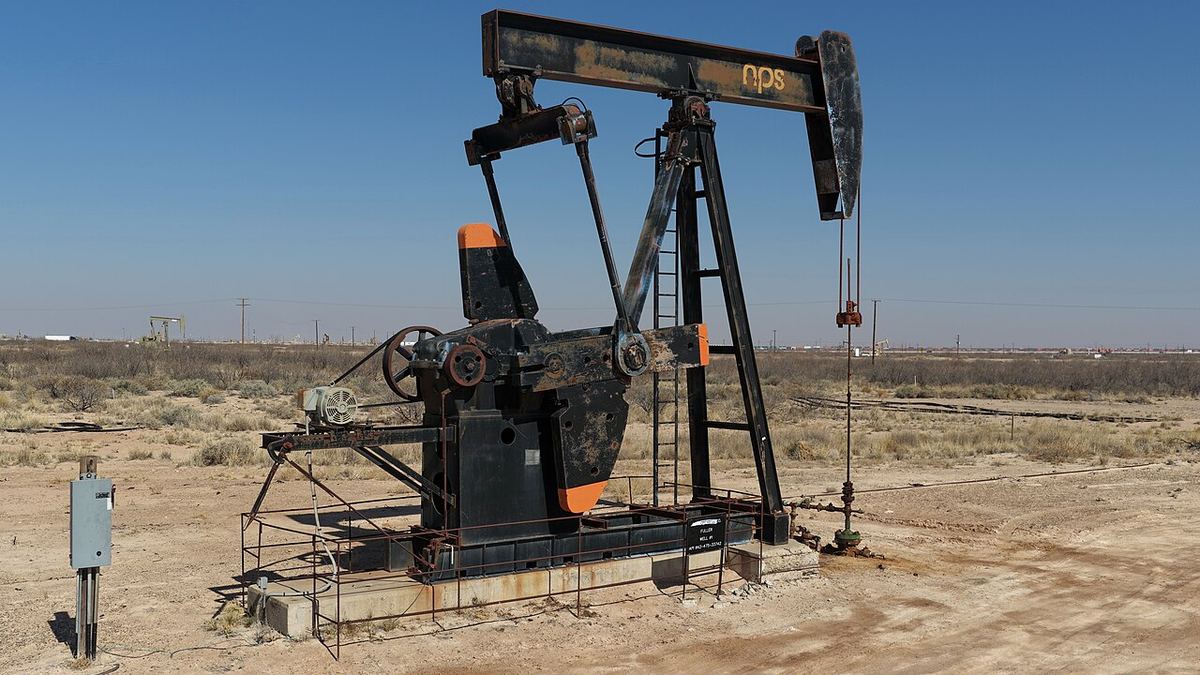
File photo: An oil pumpjack in the Permian Basin. This is an archive image, NOT a photo of this week's price crash. Photo: Quintin Soloviev, CC BY 4.0, via Wikimedia Commons.
I have watched oil markets do strange things over the years, but Wednesday was the kind of day that makes traders sit up straight. Brent crude — the benchmark that sets the price of most of the world's oil — fell $8.98 in a single session, 8.7 percent, to settle at $94.62 a barrel. West Texas Intermediate, the US benchmark that Canadian crude tracks, dropped $7.97, or 8.3 percent, to $88.12. Both closed at their lowest since August 31, and on Thursday the selling kept going.
Look at the week. Brent was trading near $118 last Friday. By Thursday morning it was hovering around $93.65 to $93.82. That is roughly a fifth of its value gone in less than a week. The cause is not a glut or a broken pipeline. It is politics — specifically, what American voters did on Tuesday.
Democrats won both chambers of Congress in the midterm elections, and the market read the result as a turning point for the US-Israeli war with Iran. Vice President JD Vance openly blamed the war for the Republican defeat, and reports said President Donald Trump acknowledged the conflict played a role. Traders are betting the new Congress will use funding, hearings and war-powers resolutions to check further military escalation — and that Qatar's stepped-up mediation might actually produce a deal. Oil had been carrying a fat war premium all autumn. On Wednesday, a large chunk of it came out.
Thursday made it four straight days of losses. Brent fell about 1 percent to $93.65 a barrel in early trading, and WTI slipped 1.29 percent to $86.98, according to Reuters. JPMorgan estimates the global oil market returned to a surplus of 1.1 million barrels a day in September, widening to 1.4 million in October — nearly matching last year's average. Even the US Energy Information Administration could not slow the slide: its report showed American crude inventories fell by 865,000 barrels to 409.8 million in the week ended October 30, when analysts had expected a build of 877,000. When a market shrugs off bullish inventory data, the story is about something else entirely.
What it means for Canada — on budget day, of all days
The timing could hardly be sharper. Finance Minister François-Philippe Champagne tables Budget 2026 — "Masters of Our Destiny" — at 4 p.m. Eastern today, and the Parliamentary Budget Officer projects a $63.3-billion deficit for 2026-27. Ottawa's fiscal math leans heavily on resource revenues, and Alberta's budget is built on oil royalties. A $20 drop in Brent is not an abstract chart line in Edmonton or Calgary — it is the difference between a comfortable surplus and a scramble, on the very day the government sets out its spending plans.
Enjoyed this guide?
Canada Pulse is an independent publication. Every guide is researched, written and carefully edited, and kept free forever. If this saved you time or made your life easier, please don't let the effort go unnoticed — support our work with whatever you can, from $1 upward. Every dollar keeps the guides coming.
💛 Donate via PayPalFor drivers, the news is better — with a catch. Crude usually feeds through to gasoline prices within days, though taxes, refining margins and the exchange rate decide how much of the drop you actually see. Nobody should expect a 9 percent cut at the pump: roughly half of what you pay is tax and margin, and retail prices always move slower than crude. But if Brent stays near $94, the direction is your friend.
The Canadian dollar is the other thing to watch. Traders call it a petrocurrency for a reason: it tends to move with oil. A sustained slide in crude would add pressure there too, which in turn makes imports — and everything priced in US dollars — a little dearer. That is the double edge of an oil crash for a country that both sells oil and buys so much else from abroad.
Why the crash could reverse just as fast
But nothing has actually been agreed with Tehran yet. The Strait of Hormuz remains largely closed to commercial shipping, and the Eurasia Group warned in a note that a fresh escalation could send Brent into a $110-to-$125 band. The physical market, meanwhile, is tighter than the price suggests — US crude, gasoline and distillate inventories all fell last week, and demand hit its highest in a year, according to the Energy Information Administration.
The market has bet that the midterms changed the politics of the war, and the war premium built up over the autumn is coming out. It might be right. But oil has a habit of humbling confident bets, and a market that can lose a fifth of its value in four sessions can gain it back just as fast. Watch the pump, watch the loonie, and watch what Champagne says at 4 p.m. — because today, the budget and the barrel are the same story.
Sources
Reuters, November 5, 2026; BusinessWorld (Reuters), November 5, 2026; Business Day (Reuters), November 4, 2026; Finance Intellect (Bloomberg), November 5, 2026; HDFC Sky (Oilprice.com), November 5, 2026; RL News, November 3, 2026.
Enjoyed this guide?
Canada Pulse is an independent publication. Every guide is researched, written and carefully edited, and kept free forever. If this saved you time or made your life easier, please don't let the effort go unnoticed — support our work with whatever you can, from $1 upward. Every dollar keeps the guides coming.
💛 Donate via PayPal