Aiden Pleterski Trial: 'Crypto King' Spent $16.3M of Investor Cash on Cars, Jets and Credit Cards, Forensic Accountant Testifies
$36.3 million came in. Not one dollar of it went where investors were told it would go. That's what a jury in Toronto heard on Friday, as the fraud trial of Aiden Pleterski — the 27-year-old who branded himself Canada's "Crypto King" — reached its most damaging week yet.
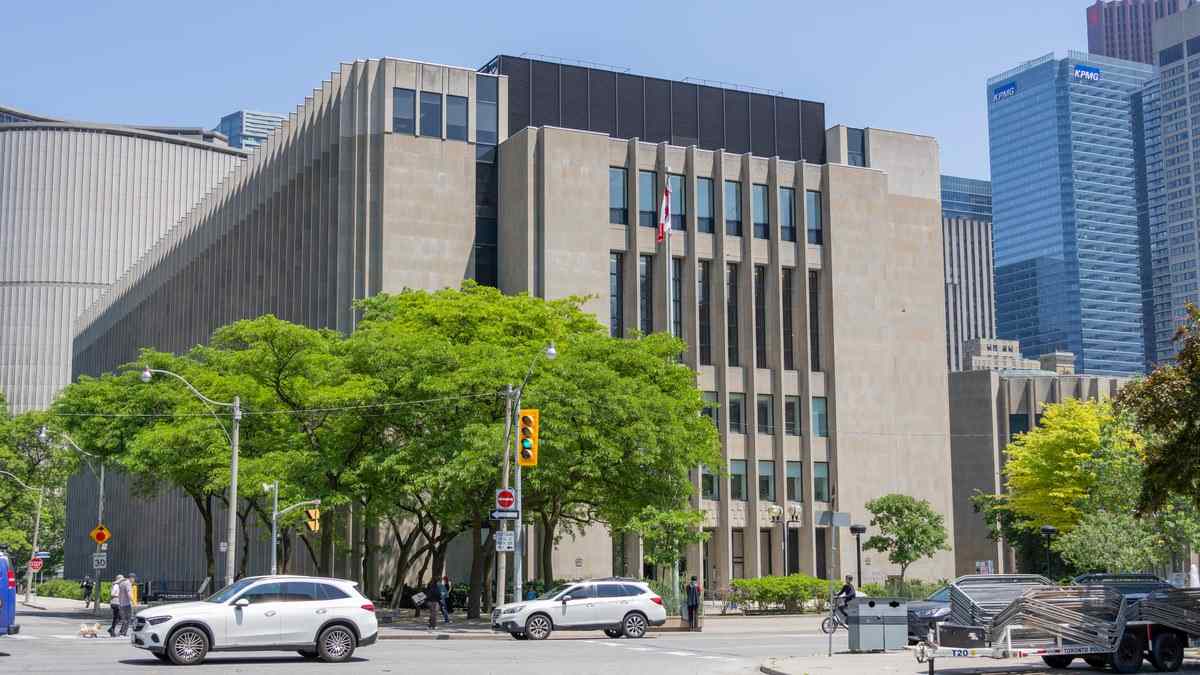
Photo: Dillan Payne / Wikimedia Commons (CC BY-SA 2.0) — file photo of Toronto's courthouse
Albert Ciorma, a senior forensic accountant with the Ontario Securities Commission, walked the court through years of bank records and laid out, line by line, where the money actually went. The numbers were blunt. And Pleterski — representing himself, no lawyer — sat through every one of them.
The Money Never Reached a Trading Platform
Ciorma told the court that between 2020 and 2022, investors gave Pleterski $36.3 million to trade in cryptocurrency and foreign exchange. His contracts named the platform: FXChoice. According to the forensic audit, none of the investor money ever reached FXChoice. Total sent to every other foreign-exchange and crypto platform combined: about $113,000.
So where did it go? Ciorma said Pleterski spent roughly $5.6 million on luxury vehicles, $4.9 million on credit card bills, $870,000 on travel and private jets, $598,000 on security — and gave nearly $3.7 million to his parents. He also pulled $609,000 in cash advances from a credit card. Add it up and the personal spending tops $16.3 million.
The receipts went further: more than $84,000 for a luxury Miami rental in October 2021, $95,200 to the Toronto Blue Jays in April 2022 — plus hotels, designer clothing and jewelry.
$16.1 Million in "Returns" — the Ponzi Pattern
Here's the part that made the courtroom go quiet. Ciorma testified that Pleterski paid out another $16.1 million to investors — money he described as returns. But according to the audit, those payouts came from the funds of other investors, not from trading profits.
Crown prosecutor Scott Patterson called it a repeating rhythm: "We see the same pattern, money in and expenses to credit cards." Old investors paid with new investors' cash — the textbook shape of a Ponzi scheme, and the core of the Crown's case.
The $311 Million Screenshot That Wasn't Real
One of the trial's most striking moments came earlier in the week, and Friday's testimony closed the loop on it. Two investors had testified about seeing a video of Pleterski's FXChoice account showing a balance of $311 million in the spring of 2022. For people who'd handed over their savings, that video was proof everything was fine.
Enjoyed this guide?
Canada Pulse is an independent publication. Every guide is researched, written and carefully edited, and kept free forever. If this saved you time or made your life easier, please don't let the effort go unnoticed — support our work with whatever you can, from $1 upward. Every dollar keeps the guides coming.
💛 Donate via PayPalOne of them, Mitchell Learning, testified he later got into Pleterski's email and found the account closed. He said Pleterski confessed: he'd lost the investor funds, then started using money from new investors to pay off the old ones.
Patterson put the question to Ciorma on Friday, pointing at the FXChoice accounts he'd audited: "Did you see $311 million in either of those accounts?"
"No, just what we've seen today," Ciorma replied.
A Real Estate Developer Who Put In $4.5 Million
Nearly a dozen investors have testified, collectively describing the same pitch: hand over funds for foreign-exchange and crypto trading, pocket weekly gains of roughly two to ten per cent, get regular text updates on your "returns." Most said they never got a cent back. One real estate developer put in more than $4.5 million — and had recorded his calls. In an April 2022 recording played in court, he asked whether a $700,000 payment had come from FXChoice or from other investors. Pleterski said the platform — then added that since February 2022 he'd been paying returns out of his own pocket because FXChoice wasn't paying him. Toronto realtor Luciano Valerio told the court he borrowed $150,000 on his line of credit to invest in 2022. He has never recovered any of it.
How We Got Here
Pleterski has pleaded not guilty to fraud over $5,000 and money laundering. He is representing himself before the jury — and according to courtroom reporting, he has declined to cross-examine witnesses, telling Superior Court Justice Shaun Nakatsuru he lacked the legal knowledge to challenge inconsistencies.
Durham Regional Police and the OSC charged him in May 2024 after an investigation the force called its largest-ever fraud probe — more than 40 court orders, over 18 months of financial analysis. Investors had forced him into bankruptcy back in August 2022 trying to recover what they were owed; months later he was abducted and held for three days by men who allegedly included some of his own investors, a case that produced its own separate convictions.
The trial began October 5 and is expected to run about four weeks. The fraud charge alone carries a maximum of 14 years in prison.
The forensic accountant returns to the stand Monday.
Note on video: Courtroom proceedings aren't filmed, and no reputable broadcast outlet has published a dedicated video segment on Friday's testimony yet — so there's no embed for this one. You can read CBC's ongoing trial coverage via the links below; we'll add an official video segment here if one is published.
Sources
- CBC (via EuropeSays) — "'Crypto King' spent $16.3M of investor funds on cars, credit cards, jets, security, accountant testifies" (Oct. 16, 2026)
- CryptoTimes — "Ontario 'Crypto King' Spent $16.3M of Investors' Money on Himself, Accountant Testifies" (Oct. 16, 2026)
- BlockTribune — "Investor Testifies He Gave 'Crypto King' Aiden Pleterski More Than $4.5M" (Oct. 15, 2026)
- Cointelegraph — "Aiden Pleterski Faces Trial Over Alleged $30M Crypto Fraud" (Sept. 2026)
- Binance Square — "Aiden Pleterski, Canada's 'Crypto King,' Accused of Spending $16.3M on Luxury Cars and Private Jets" (Oct. 17, 2026)
- BlockTribune — "Investors Testify as Fraud Trial of Toronto's Self-Described 'Crypto King' Begins" (Oct. 6, 2026)
Enjoyed this guide?
Canada Pulse is an independent publication. Every guide is researched, written and carefully edited, and kept free forever. If this saved you time or made your life easier, please don't let the effort go unnoticed — support our work with whatever you can, from $1 upward. Every dollar keeps the guides coming.
💛 Donate via PayPal