PBO October 2026 Outlook: Growth Cut to 0.9%, $63.3B Deficit — Tariffs Could Cost 185,000 Jobs
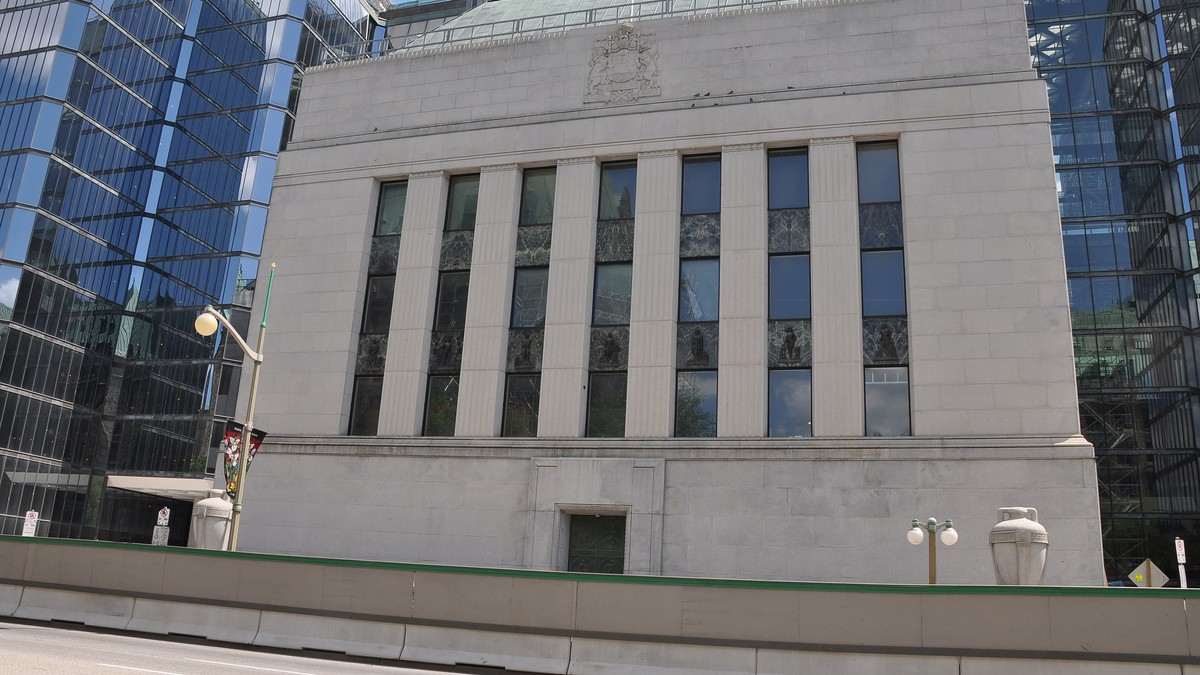
Photo: Bank of Canada headquarters in Ottawa — shankar s. / Wikimedia Commons (CC BY 2.0).
Ottawa's budget watchdog dropped its October outlook on Tuesday, and the message is blunt: the tariff war with Washington is now the single biggest drag on Canada's economy, and the federal books are about to bleed for years. The Parliamentary Budget Office cut this year's growth forecast again, put a $63.3-billion price tag on the deficit — and estimated the trade fight could wipe out as many as 185,000 jobs.
The headline revision: real GDP growth of just 0.9 per cent in 2026, down from the 1.1 per cent the PBO projected in June. Next year looks only a little better — 1.5 per cent, trimmed from 1.6 per cent. "Canada faces a more challenging economic and fiscal outlook than we projected in June," parliamentary budget officer Annette Ryan said in the release. "Additional trade measures and ongoing uncertainty are weighing on growth in real output — what we produce as a country."
The timing is no mystery. Trade talks between Canada and the United States collapsed at the end of August, followed by a fresh round of American tariffs and Canadian counter-tariffs. The PBO's October numbers bake in every trade measure in place as of October 1 — alongside a separate assessment note drilling into what the tariffs alone are doing to the country.
What the tariff war actually costs: 1.4% of GDP, 185,000 jobs
Here's the scenario nobody in Ottawa wants to read twice. If the trade measures introduced since early 2025 stay in place permanently, the PBO estimates Canada's real GDP ends up 1.4 per cent lower after five years than under a pre-tariff baseline. Back in June, the same office put that damage at 0.9 per cent. The wounds are getting deeper, not shallower.
On jobs, the model points to as many as 185,000 positions disappearing — 0.9 per cent of employment — with the hit peaking about six quarters after the tariff shock. The trade-weighted average effective U.S. tariff rate on Canadian imports has jumped from 5.3 per cent in June to 7.7 per cent now; Canada's own rate on American goods rose from 1.6 per cent to 3.0 per cent. Exports and business investment take the first and hardest hits as higher trade costs choke off market access, while consumer prices rise.
Enjoyed this guide?
Canada Pulse is an independent publication. Every guide is researched, written and carefully edited, and kept free forever. If this saved you time or made your life easier, please don't let the effort go unnoticed — support our work with whatever you can, from $1 upward. Every dollar keeps the guides coming.
💛 Donate via PayPalThe deficit: $63.3 billion this year, $70.2 billion next
The fiscal side is uglier than June's picture too. The PBO now projects a budgetary deficit of C$63.3 billion for 2026–27, peaking at $70.2 billion in 2027–28. Across the 2026–27 to 2030–31 window, deficits run about $3 billion higher per year than the June outlook — new spending measures more than wiping out the benefit of stronger revenues.
One twist worth understanding: nominal GDP — the broadest measure of the tax base — was actually revised upward, by an average of $26.9 billion a year. That's the GDP deflator doing the work, not real growth: higher oil and export prices puff up the dollar figure while the economy produces less. Ryan warned the federal debt-to-GDP ratio will "rise steadily over the five-year horizon," from 40.8 per cent this year to 42.6 per cent by 2030–31, with federal debt heading toward CA$1.67 trillion.
And the PBO took a quiet swing at Ottawa's fiscal framework. The government's "balanced operating budget" anchor excludes debt-financed capital spending — so borrowing and debt keep growing even while the target is technically hit. "A balanced operating budget anchor should not be interpreted as a balanced fiscal position," Ryan said. In plain English: the books look cleaner than they are.
What this means for your wallet
Higher energy prices keep inflation elevated at 2.8 per cent this year, easing to 2.4 per cent in 2027. More important for anyone with a mortgage renewal on the horizon: the PBO assumes the Bank of Canada starts raising its policy rate in early 2027 "to keep inflation expectations anchored," reaching 2.75 per cent by midyear. If that path holds, the rate relief many borrowers have been counting on gets pushed further out.
One caveat, and it matters: these are model-based projections assuming the tariffs stay permanent. A negotiated settlement with Washington would change the picture. Still, my honest read is simple. Canada's economy is running a tab, and Washington is holding the pen. The watchdog isn't forecasting doom. It's telling Ottawa to stop pretending the bill isn't coming.
Editor's note: we could not find a current video from a mainstream Canadian news outlet specifically on this PBO outlook — the office's own release and the reporting linked below carry the confirmed details.
Sources
- Parliamentary Budget Office — Economic and Fiscal Outlook, October 2026
- Parliamentary Budget Office — Assessment note: Economic impact of recent Canada-U.S. trade measures (Oct 20, 2026)
- Advisor.ca (The Canadian Press) — "PBO trims economic forecast amid new U.S. tariffs" (Oct 20, 2026)
- Law360 Canada — "Canada-U.S. trade war could lower expected GDP by 1.4% over 5 years: PBO" (Oct 20, 2026)
Enjoyed this guide?
Canada Pulse is an independent publication. Every guide is researched, written and carefully edited, and kept free forever. If this saved you time or made your life easier, please don't let the effort go unnoticed — support our work with whatever you can, from $1 upward. Every dollar keeps the guides coming.
💛 Donate via PayPal