Port Saint John Gets $463M Makeover: Ottawa Bets Big on Trade Beyond the U.S.
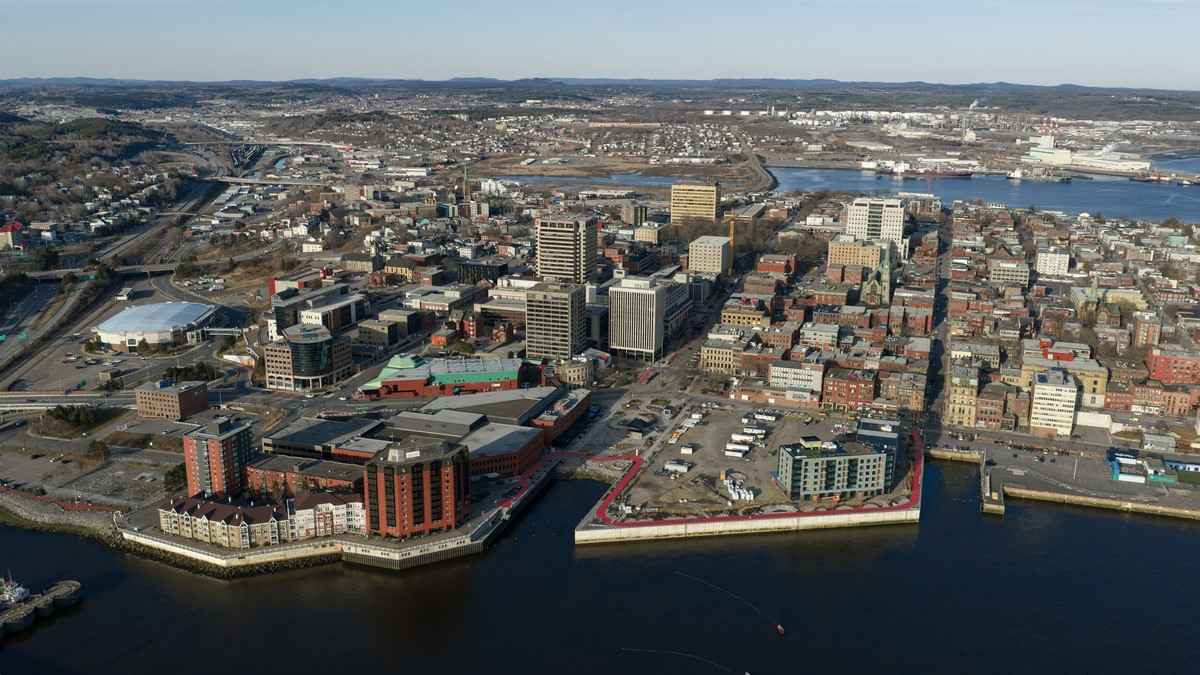
Canada's big plan to stop depending on the United States for its trade is getting its first real construction project — and it's in Saint John, New Brunswick. On Wednesday, Transport Minister Steven MacKinnon stood on the Saint John waterfront and announced up to $254 million in federal money for a $463-million overhaul of the port's trade corridor, the opening shot in Ottawa's campaign to get Canadian goods to the world by routes that don't run through America.
The announcement, made jointly with Premier Susan Holt, is the first project funded under the federal government's $5-billion Trade Diversification Corridors Fund. The province is adding $116.5 million, and the remaining $92.5 million comes from project partners — J.D. Irving, Ltd. and the Saint John Port Authority — according to CBC reporting on the announcement. Construction could begin as early as spring 2027, with completion targeted for 2029 or 2030.
What's actually getting built
This isn't a ribbon-cutting for one building. It's a whole corridor of upgrades, and each piece fixes a bottleneck. The port's main channel gets dredged — widened and deepened so ships can move two ways at high tide instead of taking turns, which port CEO Craig Bell Estabrooks called the biggest piece of the project. The federal announcement says the work will increase high-water tidal windows for fully loaded vessels by at least 30 per cent.
Then there's the land side: expanded port warehouses, a new 2,787-square-metre Canada Border Services Agency container examination facility, shoreline stabilization protecting the Bayshore Rail Terminal — the port's only rail access — and a full rebuild of the Simms Corner intersection, where rail and road traffic currently tangle in one of the city's most notorious junctions. More than 103 kilometres of New Brunswick Southern Railway track gets replaced with continuously welded rail, pushing mainline speeds to 64 km/h.
The target: grow the port's annual capacity to between 850,000 and one million containers (TEUs) — roughly where it's already heading after the $247-million West Side modernization finished in January, which took the terminal's design capacity from 150,000 TEUs up toward a million.
The politics behind the concrete
Nobody at the announcement pretended this was just about ships. "Canada cannot take access to any single market for granted," MacKinnon said at the port, arguing that expanding corridors like Saint John is how Canada keeps its economy competitive when its biggest customer is slapping tariffs on its goods. He added: "Making an investment here in Saint John is an investment that pays off for not just Saint John and New Brunswick, but for the rest of Canada."
Holt was even more direct about the trade-war context. "Canada has long benefited from our relationship with the U.S., but it was very clear that we needed to look elsewhere for growth, for New Brunswick and for our country," the premier said. "And the minute that we start looking abroad, the Port of Saint John comes into view."
Enjoyed this guide?
Canada Pulse is an independent publication. Every guide is researched, written and carefully edited, and kept free forever. If this saved you time or made your life easier, please don't let the effort go unnoticed — support our work with whatever you can, from $1 upward. Every dollar keeps the guides coming.
💛 Donate via PayPalThe timing is no accident. This is the same week Ottawa and Queen's Park rolled out a $9-billion package to shield Ontario's steel and auto sectors from U.S. tariffs, and the same week Carney was in Turkey talking trade diversification with President Erdogan. Saint John is the infrastructure end of that strategy: the ports and railways that make "beyond America" trade physically possible, not just rhetorically appealing.
Does it work?
Honestly, this one has a track record behind it. The port's modernization partnership with Dubai-based DP World has already delivered: container throughput jumped 400 per cent since the project began, hitting nearly 240,000 TEUs in 2025, with a 29.4 per cent year-over-year increase last year alone. Wednesday's announcement is a bet that deeper channels, faster rail and better roads turn that momentum into a genuine Atlantic gateway — the kind of option Canadian exporters can actually use when they want to sell to Europe instead of the U.S.
Whether it shifts real cargo away from American routes will take years to judge. But for New Brunswick, the math is simple: $463 million of concrete, steel and dredging, thousands of construction jobs, and a port built for a world where Canada's biggest trading partner can no longer be counted on.
Sources
SupplyPro — "Ottawa commits $254 million to Saint John trade corridor upgrades" (22 Oct 2026)
Enjoyed this guide?
Canada Pulse is an independent publication. Every guide is researched, written and carefully edited, and kept free forever. If this saved you time or made your life easier, please don't let the effort go unnoticed — support our work with whatever you can, from $1 upward. Every dollar keeps the guides coming.
💛 Donate via PayPal