120,000 Federal Workers Will Vote on Striking This Winter: What PSAC’s Strike Vote Means
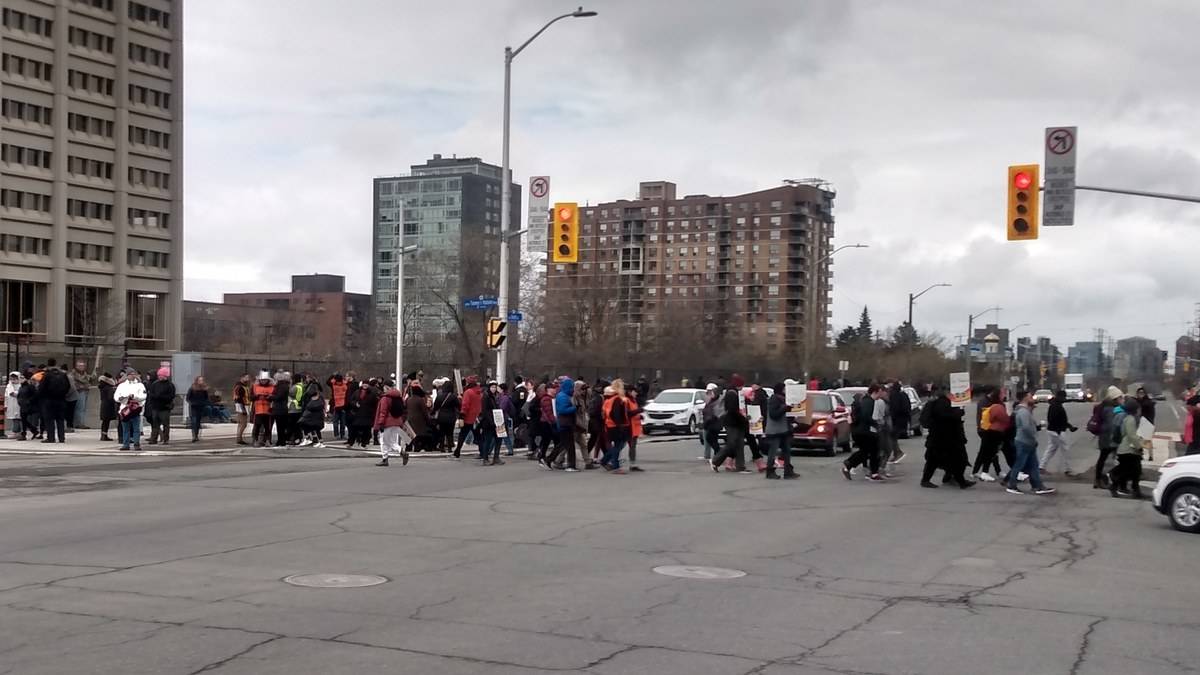
File photo: Strikers near Tunney's Pasture, Ottawa, during the 2023 federal employee strike (Earl Andrew / Wikimedia Commons, CC BY-SA 4.0).
The last time federal public servants went on strike, 155,000 of them spent almost two weeks on picket lines and brought the government to its knees. Now it might happen again. The Public Service Alliance of Canada — the union that represents the people who process your passport, your benefits, your taxes — announced this week that 120,000 federal workers will vote on whether to strike, starting November 16.
The votes will run for more than two months, through January 22, 2027, covering the PA (Program and Administrative Services), TC (Technical Services) and EB (Education and Library Science) bargaining groups. That's wildland firefighters, passport and benefit officers, fishery officers, federal teachers, librarians and administrative staff — the people who keep the machinery of Ottawa running.
What the fight is actually about
Follow the money first, because the numbers are stark. The Treasury Board's April wage offer averaged less than 1 per cent a year — about $58 a month over the life of the agreement, by the union's math. PSAC is asking for 4.75 per cent a year for three years. With September inflation running at 3.1 per cent, the union calls the offer a pay cut — and honestly, on the numbers, it's hard to argue.
There's a second front, and it isn't about pay at all. PSAC says the employer wants to strip workforce adjustment and the dental care plan out of collective bargaining entirely. These are the details as described by the union — the Treasury Board's side of these specifics hasn't been independently confirmed in the reporting I've seen, and I'll say that plainly rather than pretend otherwise.
"The government has left us no other choice"
The union and the Treasury Board have been bargaining for a year and a half, and PSAC national president Sharon DeSousa sounds done. "We want to negotiate a fair deal, but by pushing pay cuts and refusing to discuss any of our key issues, Treasury Board has given us no choice but to take strike votes," she said. "The government has left us no other choice. This is a wake-up call for the government to stop playing games and put a fair offer on the table."
Enjoyed this guide?
Canada Pulse is an independent publication. Every guide is researched, written and carefully edited, and kept free forever. If this saved you time or made your life easier, please don't let the effort go unnoticed — support our work with whatever you can, from $1 upward. Every dollar keeps the guides coming.
💛 Donate via PayPalDeSousa also stressed that a strike is "always the union's last resort" — and she's right to frame it that way, because a strike vote is not a strike. It asks members whether they would authorize a walkout if talks fail. But here's the thing: unions don't spend months running strike votes they intend to lose. When PSAC pulled this lever in 2023, 12 days on the picket line ended with 12.6 per cent wage gains over the agreement's term. The union knows its leverage.
The calendar is brutal for the government
Watch the dates, because they tell the story. PSAC releases the voting session details on October 28. The votes begin November 16. And Finance Minister François-Philippe Champagne tables the 2026 federal budget on November 5 — right before the votes start. So the government will walk into budget season with 120,000 of its own employees officially moving toward a strike mandate, a PBO deficit warning hanging over the room, and inflation at 3.1 per cent making every wage fight a fairness fight.
That's a government negotiating with itself, in public, against the people who process Canadians' benefits. Not a comfortable place to be.
What happens if they walk out
If a strike vote passes, the next step is a mandate to strike — a separate decision the union has not announced. But Canadians should start thinking about what a federal walkout looks like in winter: passports, EI and benefit processing, tax services, federal scientists, librarians, teachers. The 2023 strike showed what two weeks without these people feels like. A 2027 strike would land even harder, because the union would enter it with the credibility of having won last time.
Editor's note: No short video of this week's announcement from a reputable outlet was available at publication time, so none is embedded — CTV News' October 21 broadcast covering the story is linked in the sources below instead.
Sources
- The Canadian Press (Catherine Morrison), "Federal union announces strike votes for 120,000 federal public servants" (Oct 21, 2026; via Canadian Reviews) — noticiasenvivo.cl (Canadian Press report)
- ottown.ca, "Strike Votes Set for 120,000 Federal Public Service Workers" (Oct 22, 2026) — ottown.ca
- SSBCrack News, "PSAC Calls Nationwide Strike Votes Amid Dispute Over Wage Proposals and Workplace Issues" (Oct 22, 2026) — news.ssbcrack.com
- CTV News Ottawa at Six, October 21, 2026 (broadcast segment on PSAC strike vote) — youtube.com
Enjoyed this guide?
Canada Pulse is an independent publication. Every guide is researched, written and carefully edited, and kept free forever. If this saved you time or made your life easier, please don't let the effort go unnoticed — support our work with whatever you can, from $1 upward. Every dollar keeps the guides coming.
💛 Donate via PayPal