Canada Weighs Nationalizing Stelco as Joly Gives Cleveland-Cliffs Ultimatum Over 500 Layoffs
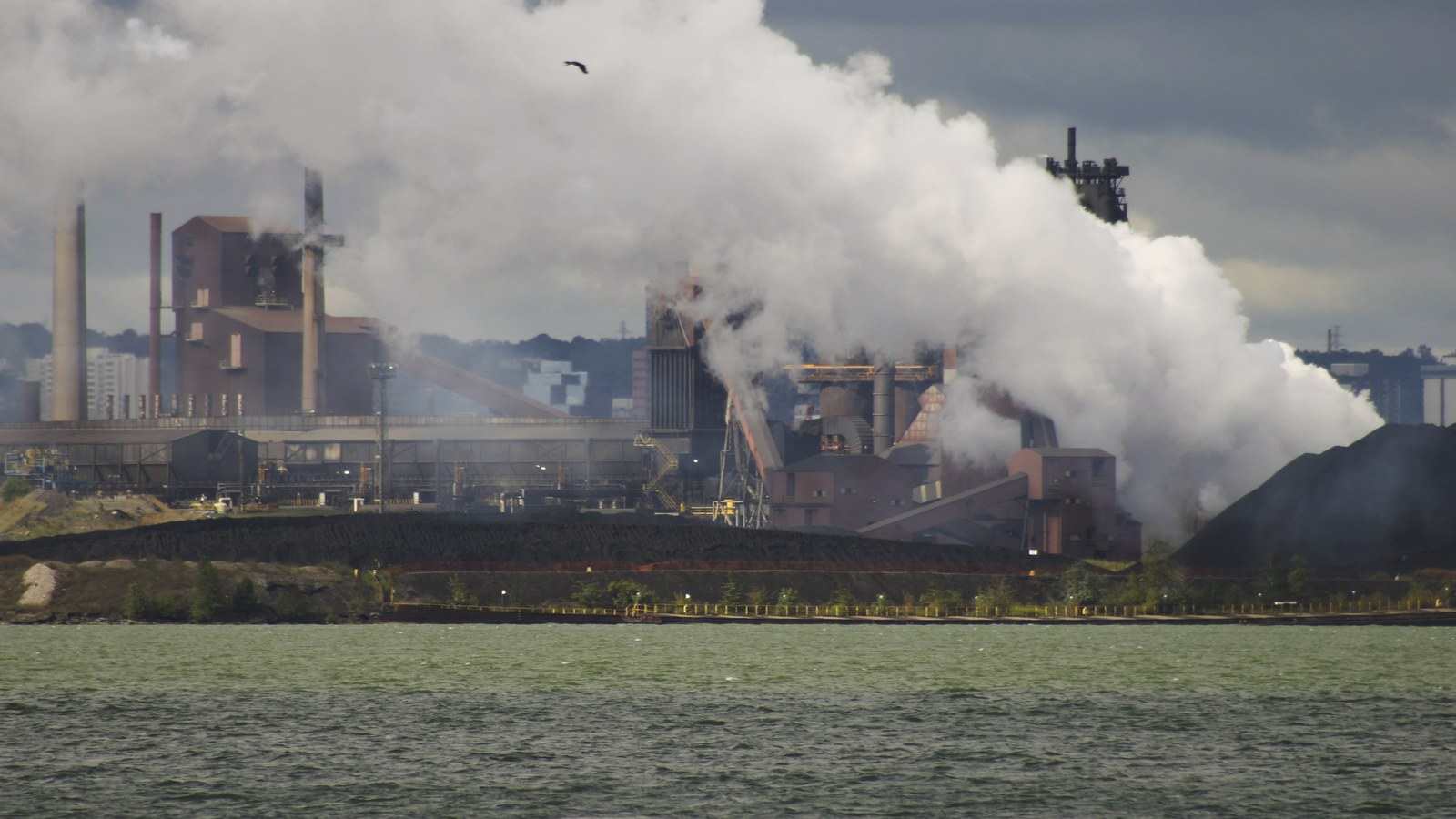
Canada is now openly talking about doing something it has almost never done: taking a major industrial company back into public hands. Industry Minister Mélanie Joly said Friday, October 16, that Ottawa is exploring every option under the Investment Canada Act — including nationalizing Stelco, the Hamilton steelmaker owned by America's Cleveland-Cliffs — because the U.S. company is cutting up to 500 Canadian jobs it promised to protect.
Photo: Martin Cathrae via Wikimedia Commons (CC BY-SA 2.0)
The numbers first. When Cleveland-Cliffs bought Stelco for $3.4 billion in 2024, Ottawa approved the takeover under the Investment Canada Act with binding conditions: keep at least the same number of unionized workers for five years, and keep the vast majority of non-union staff. Head office, collective agreements, pensions — all part of the deal.
On September 28, Stelco announced it would lay off up to 500 workers at its Hamilton Works and Lake Erie facilities and idle parts of its Hamilton plant, blaming the U.S.-Canada trade war, weak demand and import pressure. Joly's position is blunt: those commitments were legally binding, and the company is in breach.
Joly's ultimatum and the Section 40 threat
"We believe there has been multiple breaches of commitments by Cleveland-Cliffs," Joly said in Toronto on Friday, Reuters reported, "and section 40 of the ICA offers options through a court process to make sure the company obliges to the commitment made."
Section 40 is the enforcement teeth of the Act. Through a court, Ottawa can seek financial penalties, orders forcing the company to honour its commitments, or — the nuclear option — an order forcing it to sell its Canadian assets. Joly has also raised the prospect that the government itself could take an ownership stake: nationalization. "We will apply the full force of the law and every tool in the toolbox to ensure that this strategic capacity remains operational," she said.
Ottawa says it offered Cleveland-Cliffs bridge financing, loans and access to new Canadian markets to avoid the layoffs. The company's answer, in Joly's telling: rejected the help, kept the cuts. She called that "extremely disappointing."
Enjoyed this guide?
Canada Pulse is an independent publication. Every guide is researched, written and carefully edited, and kept free forever. If this saved you time or made your life easier, please don't let the effort go unnoticed — support our work with whatever you can, from $1 upward. Every dollar keeps the guides coming.
💛 Donate via PayPalCleveland-Cliffs fires back
To be fair to the other side — because this dispute is genuinely two-sided — Cleveland-Cliffs chief executive Lourenco Goncalves insists the company is in compliance. His argument: the layoffs are temporary, driven by a devastating loss of sales as the trade war shut Canadian steel out of the U.S. market, and the 2024 commitments do not require stable daily employment.
Goncalves has publicly championed Trump's steel tariffs — the same tariffs his company blames for the lost sales. Ottawa sees that as a betrayal: you can't praise the tariffs strangling your Canadian plants and then cite them as justification for breaking your promises. "They must keep the jobs in Canada, or face the prospect of having to sell their Canadian assets," Joly said.
The union isn't waiting. United Steelworkers Local 1005 says roughly 350 union members will lose work at Hamilton alone. Federal NDP Leader Avi Lewis and Ontario NDP Leader Marit Stiles say court action will take years and have called outright for nationalization — pointing to Britain's nationalization of British Steel earlier this year as precedent.
Why this fight matters beyond Hamilton
Zoom out, and this is a stress test for Canada's entire foreign-investment regime. When Ottawa approves takeovers with binding job commitments, are those commitments real — or are they the kind of promises companies make to get the deal closed? If the answer turns out to be the latter, the credibility of every future Investment Canada review is on the line.
It's also a trade-war story wearing a labour-law costume. The layoffs are real, the tariff pain is real, and the company's U.S. market has genuinely shrunk. But so are the commitments it signed. Someone has to give — and Ottawa has just told the country it is prepared to go to court, force a sale, or buy the whole thing to make sure the workers aren't the ones who pay.
With a five-business-day compliance deadline already passed and Stelco telling Ottawa it does not consider itself in violation, the next move is the courts'. Hamilton's steelworkers, meanwhile, are already getting their layoff notices. For them, the legal theories can wait. The paycheques can't.
Sources
- Reuters — Canada exploring Stelco nationalization, industry minister says
- The Brief / Globe and Mail — Ottawa Warns Stelco Owner Over Layoffs Tied to Takeover Deal
- Hashtag Investing — Ottawa Raises Forced Sale of U.S. Owned Stelco as Up to 500 Canadian Jobs Face Layoffs
Enjoyed this guide?
Canada Pulse is an independent publication. Every guide is researched, written and carefully edited, and kept free forever. If this saved you time or made your life easier, please don't let the effort go unnoticed — support our work with whatever you can, from $1 upward. Every dollar keeps the guides coming.
💛 Donate via PayPal