Canada Opens a One-Time Path to PR for 200,000 Temporary Residents — Who Qualifies and Who Doesn't
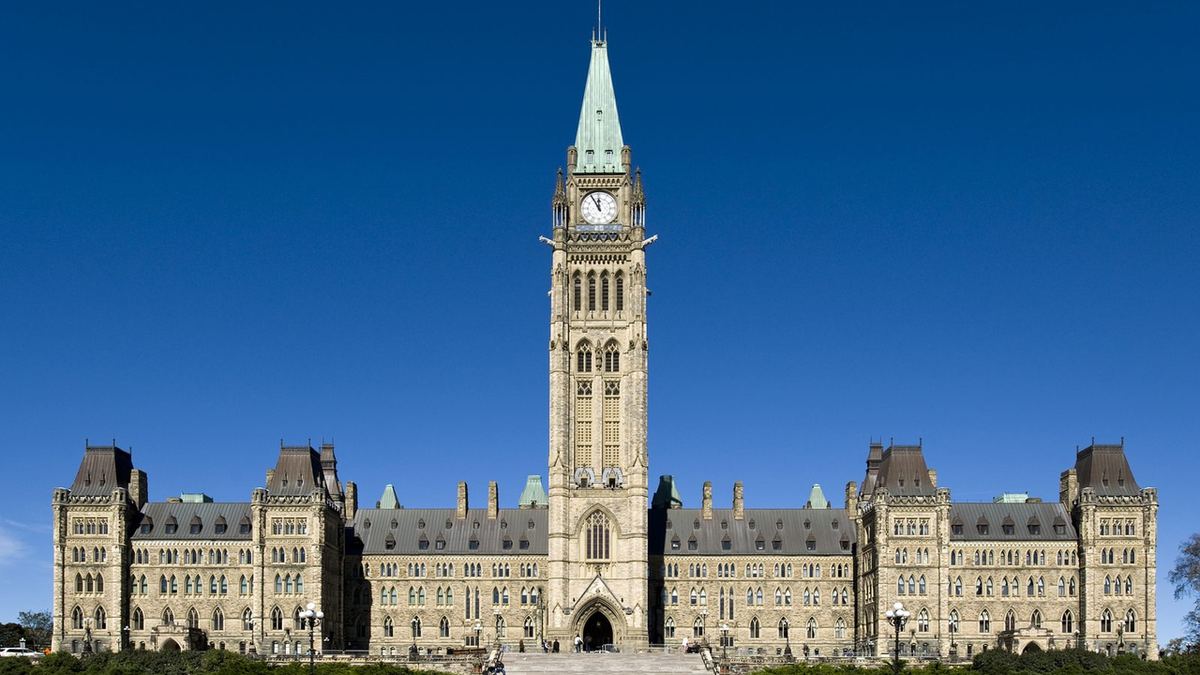
Photo: Centre Block, Parliament Hill, Ottawa — Saffron Blaze, via Wikimedia Commons (CC BY-SA 3.0). File photo, not taken today.
If you are one of the roughly 2.8 million people living in Canada on a temporary permit, Thursday's budget contained a line that probably stopped you mid-scroll. Ottawa is opening a one-time door to permanent residence for up to 200,000 people already here — and it says the door shuts at the end of 2027.
The measure arrived with Budget 2026 and the new 2027–2029 Immigration Levels Plan, published on November 5. Immigration, Refugees and Citizenship Canada calls it a time-limited transition measure, and the framing matters: this is not a new intake stream for people overseas. It is extra processing space for people who already live, work and pay taxes in Canadian communities, and who have been waiting — in many cases for years — for a decision.
Here is how the 200,000 breaks down. The first cohort, up to 100,000 people, covers workers. Provinces and territories will help pick them through the Provincial Nominee Program and a handful of closed economic pathways, matching people to regional labour shortages rather than running one national draw. The second cohort, also up to 100,000, is humanitarian: people whose humanitarian and compassionate applications have already been approved in principle, and others who applied through select existing pathways and are still waiting.
What the 622,000 number really means
You may have seen a bigger figure doing the rounds — 622,000 new permanent residents in 2027. Treat that one with care. It is not a promise. It comes from adding the 200,000 transition spaces to the top of the regular planning range, 422,000, as CIC News spelled out on November 5. The actual target for 2027 stays at 380,000 permanent resident admissions, with a planning range of 352,500 to 422,000. Same 380,000 target for 2028 and 2029.
The rest of the plan is deliberately steady. New temporary resident arrivals hold at 370,000 a year — 220,000 workers and up to 150,000 international students. More than 64 per cent of permanent admissions will still come through the economic class. The government is putting $56.9 million over four years into IRCC to run all of this.
Prime Minister Mark Carney's pitch, as reported by Bloomberg, is that the people in line for this measure are not really newcomers at all. They "have effectively already been permanent residents of their communities, whether they're temporary workers or Ukrainians who have been here for years," he said. That is the government's whole argument in one sentence: the system ballooned to nearly 3 million non-permanent residents in October 2024, and converting the settled ones is faster and fairer than asking them to leave and reapply from abroad.
Enjoyed this guide?
Canada Pulse is an independent publication. Every guide is researched, written and carefully edited, and kept free forever. If this saved you time or made your life easier, please don't let the effort go unnoticed — support our work with whatever you can, from $1 upward. Every dollar keeps the guides coming.
💛 Donate via PayPalThe part nobody can answer yet
Now the honest caveat, and it is a big one. As of publication, IRCC has not released the eligibility rules, language requirements, occupation lists or the application process for the transition measure. The Indian Express reported that those details are still to come. So if someone online is already selling you a guaranteed spot, or a checklist, they are selling you something that does not exist yet.
What we do know is who it is not for. It is not an open call for new arrivals, and it does not extend anyone's expiring permit by itself. People already in Canada should check which existing pathway they are on — provincial nominee, Express Entry, humanitarian and compassionate — because the transition measure works through those pathways rather than replacing them.
The politics are already noisy. Conservative immigration critic Michelle Rempel Garner has been pressing the government on the numbers, and critics note the 380,000 annual target is actually 15,000 higher than the 365,000 Justin Trudeau's final plan set for 2027 — awkward for a government that campaigned on having "taken back control" of immigration. The government's answer is that the temporary side is where the control shows: arrivals capped, and the non-permanent share down to 6.7 per cent as of July 1, with a goal of under 5 per cent by the end of 2027.
There is also fog in the arithmetic. The levels plan says the government still intends to land the remainder of 148,000 permanent residents promised under two one-time initiatives from last year — 115,000 protected persons and 33,000 in-Canada workers. CIC News notes it is not clear whether any of those people are counted inside the new 200,000. Until IRCC publishes the fine print, the honest answer to "am I in?" is "we don't know yet — but the queue you are already standing in is the one that matters."
Editor's note: I searched for a broadcast video from CBC, CTV or Global News explaining this announcement and could not verify a reputable, embeddable one at publishing time — the written sources below, led by IRCC's own backgrounder, cover the announcement in full.
Sources
- Immigration, Refugees and Citizenship Canada — "Building a stronger Canada through a well-managed, predictable immigration system" (backgrounder, November 5, 2026)
- CIC News — "Canada announces plans for up to 622,000 new permanent residents in 2027" (November 5, 2026)
- CIC News — "Canada identifies economic, family, and humanitarian pathways eligible for 200,000 in-Canada PR spaces" (November 6, 2026)
- The Hindu BusinessLine (Bloomberg) — "Canada plans permanent residency for 200,000 temporary residents by 2027" (November 7, 2026)
- NewsPlainly — "Canada PR relief for 2 lakh people already in Canada in 2027" (November 6, 2026; eligibility details not yet released, via Indian Express)
Enjoyed this guide?
Canada Pulse is an independent publication. Every guide is researched, written and carefully edited, and kept free forever. If this saved you time or made your life easier, please don't let the effort go unnoticed — support our work with whatever you can, from $1 upward. Every dollar keeps the guides coming.
💛 Donate via PayPal