U.S. Sanctions 8 Canadian Money Exchanges Over Iran — and the Ryan Wedding Drug-Money Trail Runs Through Them
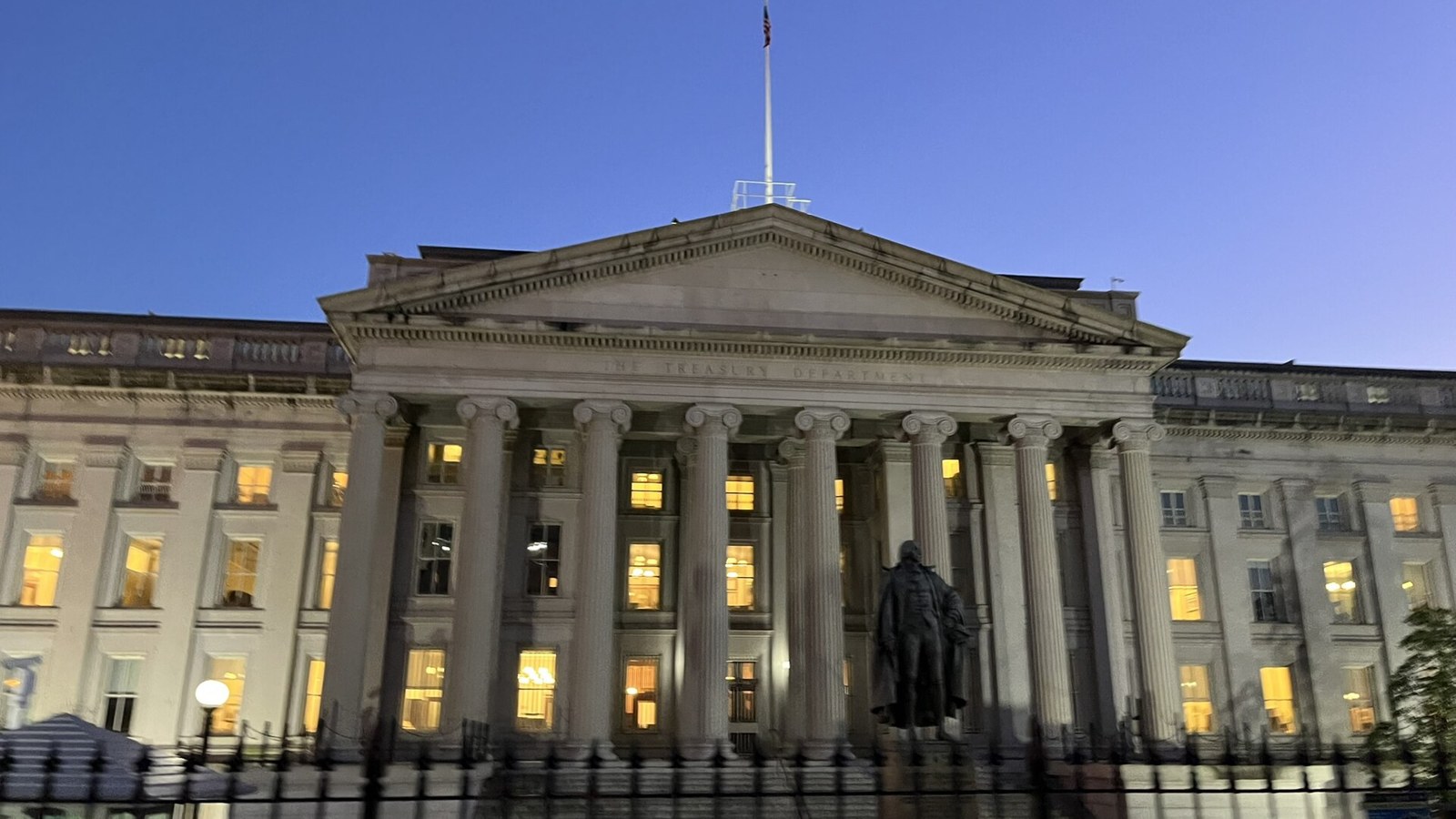
Photo: Wisneyykarin / Wikimedia Commons (CC BY-SA 4.0) — File photo: the U.S. Treasury Building in Washington, D.C., home of the department that imposed the sanctions. Not a photo of any Canadian business named in this story.
Eight currency-exchange shops in Ontario and British Columbia woke up on Friday to a punishment that, in practical terms, locks them out of the global financial system. The U.S. Treasury Department says the firms spent years moving money for Iran's regime — swapping Iranian rials for cryptocurrency, trading with sanctioned Iranian exchanges, and, in three cases, washing drug cash for Ryan Wedding, the former Canadian Olympian who is now an alleged cartel boss in U.S. custody.
The designations landed on Friday, November 6, under Executive Order 13902, as part of Operation Economic Outcast, a Treasury campaign launched in August to cut off the money channels keeping Iran's digital-asset economy running. Treasury Secretary Scott Bessent put it bluntly. "Canada cannot be a safe haven for illicit financial facilitators that provide sanctions evasion services to the Iranian regime and its proxies," he said, according to the department's announcement.
The eight firms, and what Treasury says they did
The eight are Diverse Trade Inc, trading as Million Exchange in Ontario; 1380079 BC Limited, trading as Amin Exchange in British Columbia; Top PC Technician Inc; NIA Nations Currency Ltd; 2397639 Ontario Ltd, trading as Farah Exchange; CCC Inc; B Galaxy Inc, trading as Cryptoyal; and Darvish Exchange. Six are based in Ontario. Two operate in British Columbia, with storefronts on Marine Drive in North Vancouver, according to theBreaker.
Treasury did not treat them as interchangeable. It attached a specific pattern of flows to each one. Million Exchange, it says, sent the equivalent of hundreds of thousands of dollars to addresses linked to Iran's Islamic Revolutionary Guard Corps and to terrorism. Amin Exchange received hundreds of thousands of dollars from Shelbit, an Iranian exchange Treasury sanctioned in August, and laundered millions of dollars in drug proceeds at locations in Toronto, Vancouver and Montreal. Farah Exchange, according to Treasury, sent millions of dollars in digital assets to addresses tied to Ryan Wedding. NIA Nations traded with IRGC-linked addresses and with the sanctioned Iranian exchanges Nobitex, Wallex, Ramzinex and Bitpin. Darvish Exchange swapped bitcoin for rials and traded with Nobitex, Wallex, Aban Tether and Shelbit.
Treasury said several of the firms had changed names and addresses to dodge detection, and kept operating despite earlier media warnings.
The Ryan Wedding connection
Wedding's story is the part Canadians will recognise. He competed for Canada in snowboarding at the 2002 Winter Olympics in Salt Lake City. Two decades later he was on the FBI's Ten Most Wanted list, accused of running a transnational drug trafficking operation, and he was arrested in Mexico City on January 22, 2026, then extradited to California. He has pleaded not guilty to murder and drug charges, and his trial is expected in the fall of 2027.
Enjoyed this guide?
Canada Pulse is an independent publication. Every guide is researched, written and carefully edited, and kept free forever. If this saved you time or made your life easier, please don't let the effort go unnoticed — support our work with whatever you can, from $1 upward. Every dollar keeps the guides coming.
💛 Donate via PayPalTreasury says Wedding used money-exchange businesses in the Vancouver and Toronto areas to launder billions of dollars in drug proceeds: couriers carried bulk cash to the shops, the shops converted it into digital assets, and Wedding directed the funds abroad. He worked with several of the newly designated firms to move millions of dollars' worth of digital assets before his arrest in January, according to the Treasury release.
Canada was in the room
This was not a unilateral American move. Treasury says the action was coordinated with its Financial Crimes Enforcement Network (FinCEN) and with FINTRAC, Canada's financial intelligence unit. FINTRAC issued its own statement shortly after the announcement, saying it worked with FinCEN on the designations. FINTRAC has revoked 161 money services business registrations in 2026 — more than the previous three years combined, according to CBC News reporting.
The same day, FinCEN issued a separate order cutting the Seychelles-incorporated crypto exchange MEXC Global off from the U.S. financial system. FinCEN said MEXC had facilitated at least $16 billion in illicit transactions linked to sanctions evasion by Iran, North Korea and Russia, as well as cybercrime.
Friday's action follows earlier ones: on June 2, Treasury sanctioned the Iranian exchanges Nobitex, Wallex, Bitpin and Ramzinex, and on August 7 it designated Aban Tether Exchange and Shelbit. The November 6 action is the Canadian leg of the same campaign.
What the sanctions actually do
A sanctions designation is an allegation, not a criminal conviction, and none of the eight firms has been charged in court over these claims. What it does, immediately, is freeze any property the firms hold in the United States and bar U.S. persons and companies from doing business with them. For shops that live on moving money across borders, that is close to a death sentence.
For ordinary Canadians the practical effect is narrower but real: anyone who used one of these shops for legitimate transfers — sending money to family in Iran, for instance — now has one fewer channel. Whether Canadian authorities follow up with their own charges is the next question to watch.
Sources
- U.S. Department of the Treasury — Operation Economic Outcast Sanctions Eight Canadian Money Services Businesses Enabling Iranian Regime (Nov. 6, 2026)
- Reuters — US Treasury sanctions Canadian money services firms over Iran-related transactions (Nov. 6, 2026)
- CBC News — U.S. sanctions Canadian money-exchange businesses allegedly connected to Iranian regime, Ryan Wedding (Nov. 7, 2026)
- theBreaker — U.S. sanctions two North Vancouver money services businesses connected to Iran (Nov. 6, 2026)
Enjoyed this guide?
Canada Pulse is an independent publication. Every guide is researched, written and carefully edited, and kept free forever. If this saved you time or made your life easier, please don't let the effort go unnoticed — support our work with whatever you can, from $1 upward. Every dollar keeps the guides coming.
💛 Donate via PayPal