Budget 2026: Champagne Tables 'Masters of Our Destiny' — a $400B Investment Bet, Lower Deficits, and a Fight Over the Numbers
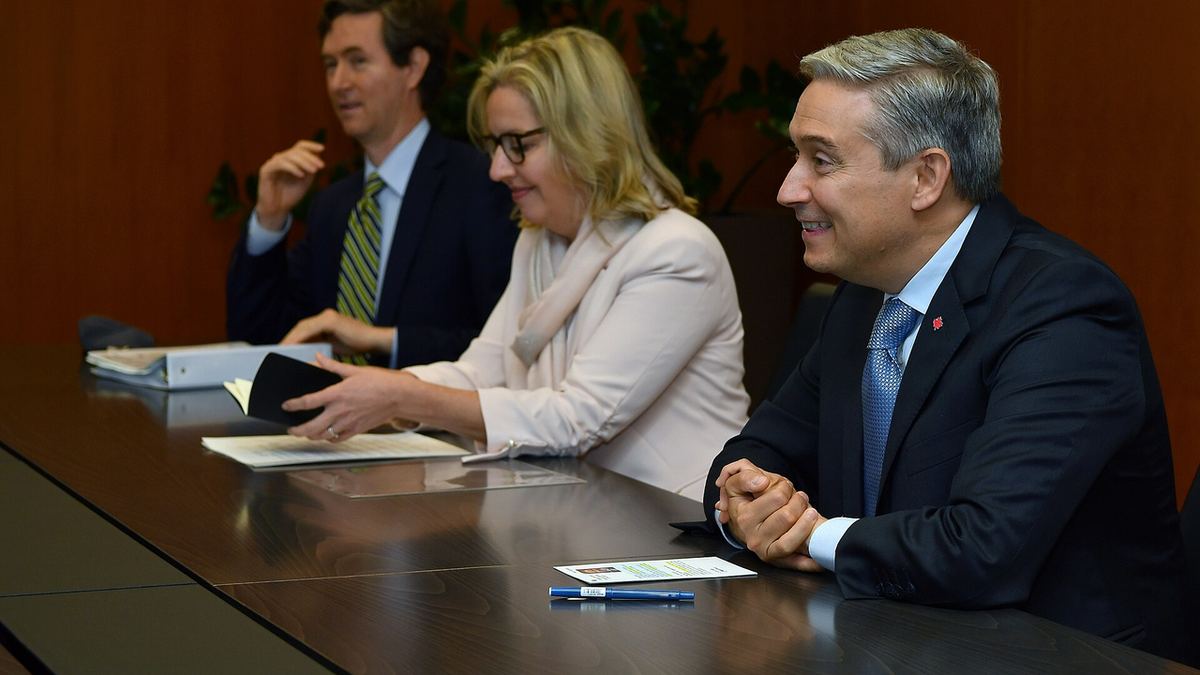
Photo: Finance Minister François-Philippe Champagne (right) at a meeting with IAEA Director General Rafael Grossi in Vienna, 14 October 2020 — Dean Calma / IAEA Imagebank, via Wikimedia Commons (CC BY 2.0). File photo, not taken today.
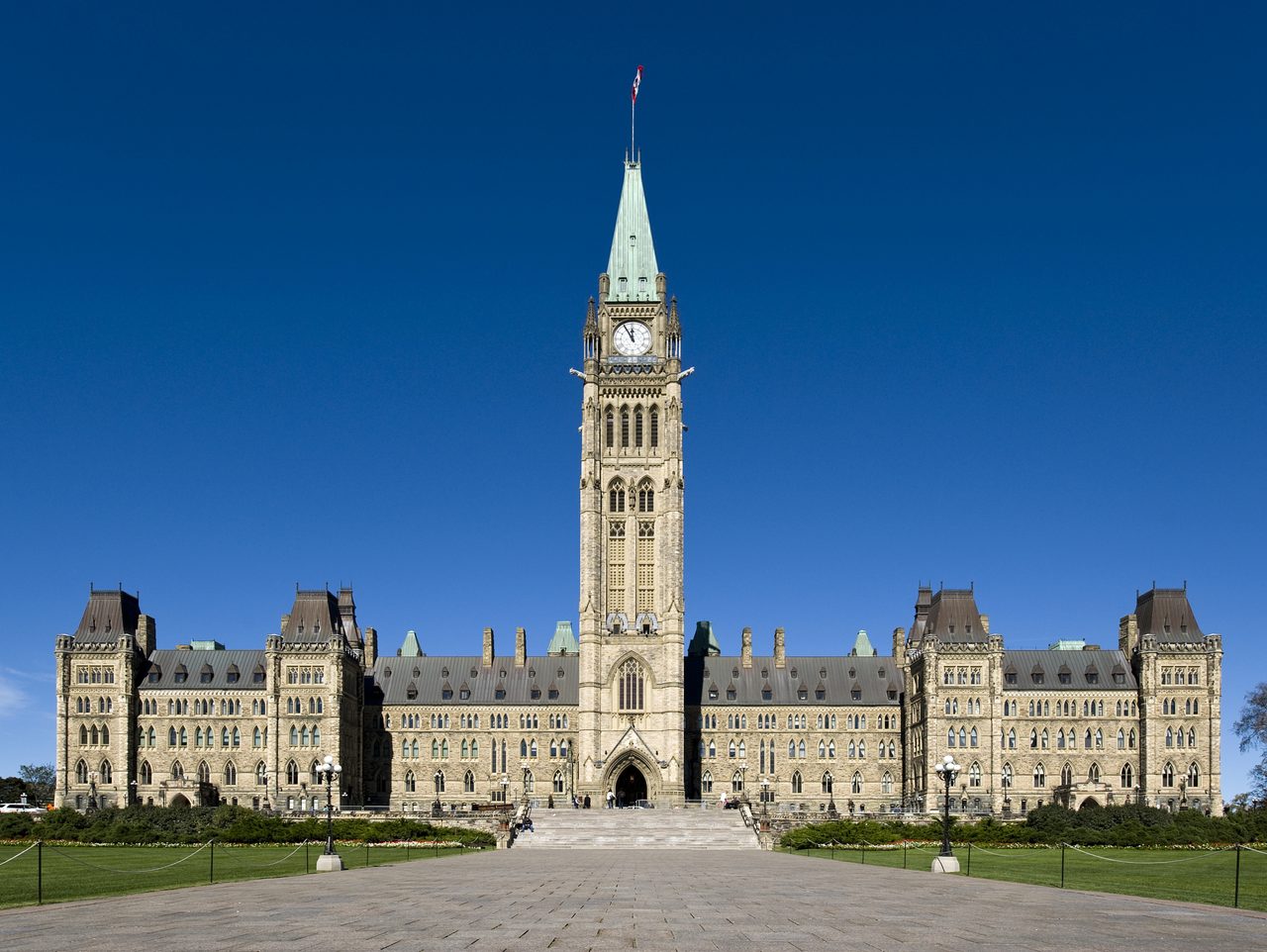
On Thursday afternoon in Ottawa, Finance Minister François-Philippe Champagne stood up in the House of Commons with a thick document and a very large claim. Budget 2026, titled "Masters of Our Destiny", is supposed to do two things at once: spend hundreds of billions building things, and convince Canadians the government is finally getting its deficits under control. It is Prime Minister Mark Carney's second budget — and the first real test of whether his talk about economic sovereignty adds up.
The headline figures are deliberately big: $400 billion of capital investment over six years, $142.1 billion in new measures over five years — largely offset by stronger-than-expected federal revenues — and $22 billion of new affordability measures. Direct program spending growth is being cut from 8% to 2%, and Champagne says the government will balance day-to-day operating spending with revenues by 2027-28, a full year ahead of schedule, while keeping the deficit-to-GDP ratio on a declining path. "Being masters of our destiny is about having the confidence to build on our strengths and shape our own future," Champagne said. "That's how we will create good jobs, make life more affordable, and build a stronger, more resilient and more united Canada."
The centrepiece is the Productivity Mega Deduction, letting businesses write off eligible capital purchases immediately — costing the federal treasury over $38 billion over five years, according to the budget documents, up from the $36 billion estimated when it was announced in September — alongside a new Canada Strong Fund and a Canada Growth Incentive. The Growth Incentive adds a new capital-gains exemption of up to $15 million on qualifying shares of growing Canadian companies, for shares issued from Budget Day until 2037. A Canada Electricity Strategy aims to double grid capacity by 2050, with investment in nuclear energy and critical minerals. Tariff-hit businesses get $7.5 billion in support, and a $2-billion heat-pump program is projected to reach about 820,000 households.
For ordinary Canadians, the budget puts the country on a path to end homelessness in 10 years, working with provinces, territories and municipalities. It enhances the Canada Groceries and Essentials Benefit with a 2027 supplement, expands Nutrition North Canada, makes the Canada Caregiver Credit fully refundable, offers help on mortgages, and supports one million energy-efficient home retrofits. All of it is aimed at the cost-of-living pressure dominating Canadian politics.
Enjoyed this guide?
Canada Pulse is an independent publication. Every guide is researched, written and carefully edited, and kept free forever. If this saved you time or made your life easier, please don't let the effort go unnoticed — support our work with whatever you can, from $1 upward. Every dollar keeps the guides coming.
💛 Donate via PayPalThe rest carries the sovereignty pitch: a Canada 160 Fund and a renewed Canada Strong Pass for arts, culture and journalism, free museum admission for under-25s, $1.5 billion for ice rinks and recreation facilities, and more than $50 billion for reconciliation. Immigration is folded in too — 380,000 permanent residents a year through 2028, temporary residents capped at 5% of the population.
But the fight over this budget is about the deficit. The Parliamentary Budget Officer's October outlook projected a federal deficit of $63.3 billion for 2026-27, peaking at $70.2 billion the year after, with borrowing of $732.9 billion over five years. The watchdog doubts the operating budget will balance by 2027-28 — it says 2028-29 — and says the deficit-to-GDP ratio will not keep falling as claimed. Debt-to-GDP, it projects, climbs from 40.8% to 42.6% by 2030-31.
Champagne's answer is that the watchdog's numbers predate Thursday's measures and miss how fast the fiscal picture has improved. The actual deficit for the first five months of this fiscal year was just $5.4 billion — less than half the $11.1 billion a year earlier — with revenues up 7.1%. University of Calgary economist Trevor Tombe puts the full-year deficit at about $35 billion if Ottawa did nothing more from September onwards. The spring update had already cut the 2025-26 deficit projection to $66.9 billion from $78.3 billion in Budget 2025 — and Budget 2026 now puts the final 2025-26 deficit at $39.3 billion, roughly 40 per cent below that spring forecast, on stronger revenues and lower spending. The government's case is that the deficit is falling faster than critics admit. Critics point to $1.3 trillion of total federal debt and rising debt charges.
The opposition wasted no time. Conservative Leader Pierre Poilievre called the plan "out-of-control spending", demanded a fuel-tax pause until next summer and repeal of the clean fuel standard and industrial carbon pricing, and said: "Mark Carney is out of touch. His spending is out of control. Canadians are out of money." NDP Leader Avi Lewis argued from the other direction that sovereignty cannot be built through tax write-offs for large corporations. Conservative finance critic Michael Chong pointed to the debt payments that keep growing. Champagne repeated his line that Canada has the strongest fiscal position in the G7 — and therefore more room to spend than its critics allow.
The budget landed two days after the US midterms, which Democrats swept; senior Democrat Jamie Raskin has told the CBC his party wants to work toward ending the tariffs hammering Canadian exporters. Canada's trade surplus hit $5.35 billion in September, the highest since May 2022, even as unemployment sits at 6.5% and inflation at 3.1%. And on 4 November Carney announced an eight-day trade mission, from 11 to 19 November, to Ireland, the Philippines, Cambodia and China — a reminder that this budget is about whether Canada can build enough at home, and sell enough abroad, to stop depending on a single neighbour.
Sources
- Government of Canada, Department of Finance — Government of Canada releases Budget 2026: Masters of our destiny, 5 November 2026
- National Post — Federal budget 2026: Canada expected to have lower deficit, 5 November 2026
- PiBrief Canada — Canada's 2026 Budget Targets Growth Amid Deficit and Trade Pressures, 5 November 2026
- The Boundary Sentinel — Federal budget to be tabled November 5 as economic growth slows (Parliamentary Budget Office outlook), 22 October 2026
- The Wall Street Journal (via TradingView) — Canada's $100 Billion Budget Plan Fueled by Oil Windfall, 5 November 2026 (2025-26 deficit $39.3B; Mega Deduction over $38B; $142B in new measures)
- Crowe Soberman — Federal Budget 2026: Key Tax Takeaways, 5 November 2026 (Canada Growth Incentive, $15M capital gains exemption)
- The Canadian Press — 2026 Federal Budget: Tax Changes, Cultural Support, “Economic Sovereignty”, 5 November 2026 ($142.1B in new measures; $15M capital gains exemption)
Enjoyed this guide?
Canada Pulse is an independent publication. Every guide is researched, written and carefully edited, and kept free forever. If this saved you time or made your life easier, please don't let the effort go unnoticed — support our work with whatever you can, from $1 upward. Every dollar keeps the guides coming.
💛 Donate via PayPal