Budget 2026 Today: What to Watch as Champagne Tables 'Masters of Our Destiny'
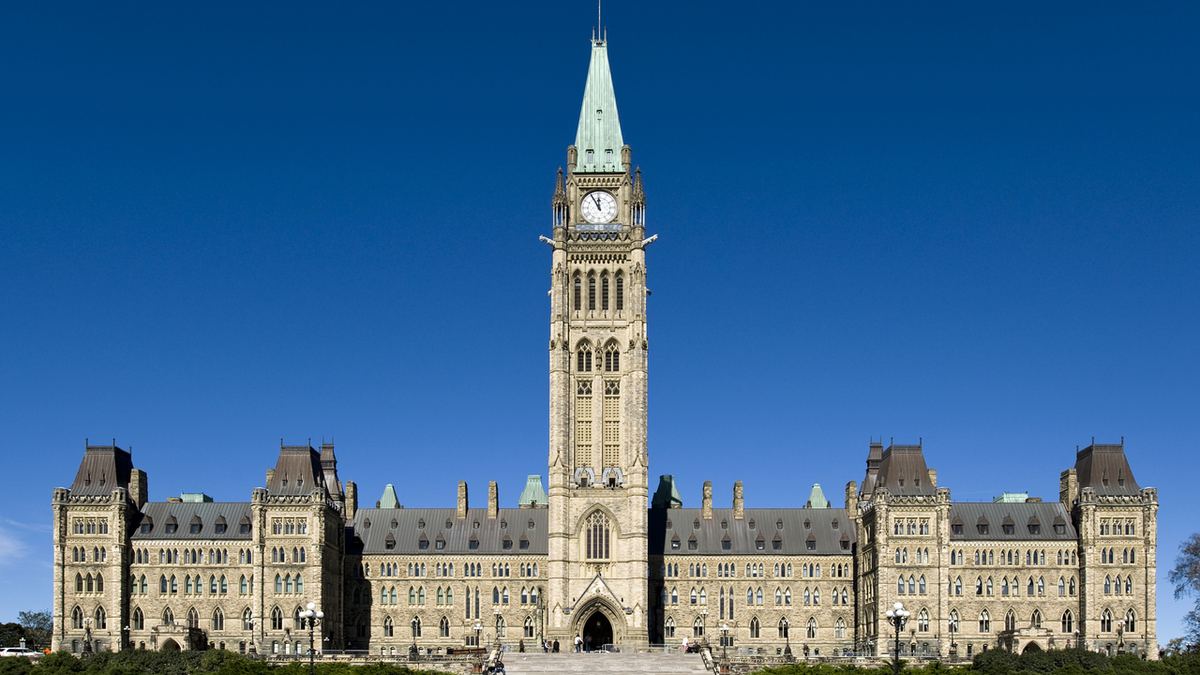
File photo: Centre Block on Parliament Hill in Ottawa. This is an archive image, NOT a photo of today's budget tabling. Photo: Saffron Blaze, CC BY-SA 3.0, via Wikimedia Commons.
Open your wallet, then open the news. Today, November 5, Finance Minister François-Philippe Champagne tables the Carney government's second budget — "Masters of Our Destiny" — and the title is not just branding. After a year of 50 percent American tariffs, a stalled trade negotiation, and a Bank of Canada rate hike last week, this budget must answer a blunt question: can Canada pay its own way without leaning so hard on the United States?
Much of what lands today was already announced, some of it is only reported, and the numbers that matter won't be settled until the document is public. Treat anything before that moment as a preview, not a promise.
Budget 2026 deficit: the number everyone will fight over
The Parliamentary Budget Officer projected in October that the federal deficit would hit about $63.3 billion this fiscal year, rising to $70.2 billion in 2027-28. For this year, that is a touch below the $65.3 billion the government itself projected in its spring update — but the watchdog sees red ink piling up in later years. Expect Conservative Leader Pierre Poilievre to call the whole thing reckless, and the government to answer that borrowing to build is different from borrowing to burn.
Champagne, speaking in Montreal on November 4, called it a plan to put Canada's economy "on a stronger footing." A senior government source cited by CBC News says the document rests on three pillars: the people, the identity, and the growth of Canada.
The productivity mega deduction and the $500 billion question
The biggest business measure is already known: the productivity mega deduction, letting companies write off 100 percent of eligible capital investment in the first year the asset is ready to use. The government pitched it at its investment summit, which it says drew nearly $500 billion in commitments. A pledge is not a cheque — the test is how much becomes factories, ports, rail lines, and power lines.
Enjoyed this guide?
Canada Pulse is an independent publication. Every guide is researched, written and carefully edited, and kept free forever. If this saved you time or made your life easier, please don't let the effort go unnoticed — support our work with whatever you can, from $1 upward. Every dollar keeps the guides coming.
💛 Donate via PayPalKPMG expects the budget's main focus to be speeding up national projects: energy, trade corridors, ports, rail, electricity, and critical minerals.
Fuel tax, rent, and savings: what Budget 2026 could change for you
Right now you pay 10 cents a litre less in federal tax on gasoline than you did last winter, and 4 cents less on diesel. Ottawa suspended the federal fuel excise tax on April 20, 2026, then extended the pause to January 31, 2027. From February 1 to March 31, 2027, you would pay half the tax again; full rates return April 1, 2027. The whole pause costs Ottawa about $5.3 billion in uncollected revenue this fiscal year.
Poilievre wants the budget to go further: suspend the GST on fuel until summer and permanently scrap the fuel standard tax, plus eliminate all federal taxes on diesel until Canada Day. Whether Champagne bites is one of today's real cliffhangers. KPMG has also flagged two possible credits in pre-budget discussion — a renter's tax credit and a home improvement tax credit — and there is loose talk of the TFSA limit rising from $7,000 to $7,500. None of that is confirmed. If someone tells you it is, they are guessing.
Two days after the U.S. midterms, under the tariff shadow
Timing matters. The budget lands two days after the November 3 U.S. midterm elections, in which Democrats seized control of both the Senate and the House of Representatives, according to Reuters. Trade Minister Dominic LeBlanc said on November 4 that the results "will not have any significant impact" on Ottawa's approach, and that he plans to speak soon with U.S. Commerce Secretary Howard Lutnick and Trade Representative Jamieson Greer. President Donald Trump said Tuesday the two countries were close to a trade deal; Prime Minister Mark Carney said work remained. Canada still faces 50 percent U.S. tariffs on a range of goods. No budget, however bold, erases that in a day.
Also watch for detail on private investment in Canada's four largest airports, and an update on the Canada Strong Fund, announced last spring. Defence will loom large too — Canada targets 5 percent of GDP on defence by 2035. When the document drops, I will check three things first: the deficit figure, the fuel-tax decision, and whether those $500 billion in pledges start turning into signed deals. Those three things, more than any slogan, will tell us whether "Masters of Our Destiny" is a plan or just a nice cover.
Sources
RL News, November 3, 2026; Business News Today, November 5, 2026; Money.ca; The Walrus, November 4, 2026; Reuters, November 4, 2026.
Enjoyed this guide?
Canada Pulse is an independent publication. Every guide is researched, written and carefully edited, and kept free forever. If this saved you time or made your life easier, please don't let the effort go unnoticed — support our work with whatever you can, from $1 upward. Every dollar keeps the guides coming.
💛 Donate via PayPal