Ottawa Wants Another $22.1 Billion: Defence, Child Care and Icebreakers Lead Supplementary Estimates (B) 2026-27
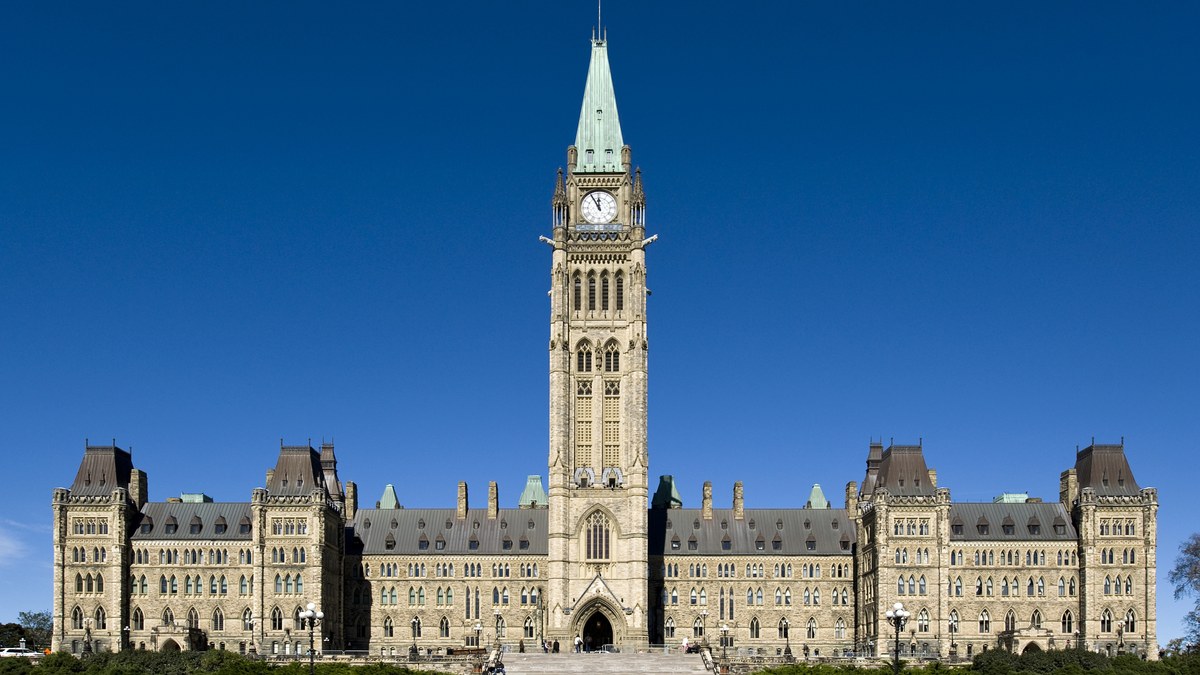
Photo: Saffron Blaze / Wikimedia Commons (CC BY-SA 3.0) — File photo: Centre Block and the Peace Tower on Parliament Hill in Ottawa. The estimates were tabled in the House of Commons, not photographed here.
The budget was barely a day old when Ottawa came back for more. On Friday, Treasury Board President Shafqat Ali walked into the House of Commons with the Supplementary Estimates (B) for 2026-27 — a request for Parliament to approve another $22.1 billion in spending, barely 24 hours after Finance Minister François-Philippe Champagne tabled Budget 2026. If the budget was the speech, this is the paperwork that turns promises into permission to spend.
Here is the part most people miss: an estimate is not a cheque. It is an "up to" number — the maximum a department is allowed to spend, and only after MPs vote on it. The government says it will introduce the supply bill by December 10. Until that vote passes, not a dollar of the $22.1 billion moves. The package covers 71 federal organizations, and with the Main Estimates and Supplementary Estimates (A) already in place, it would bring planned federal spending for 2026-27 to $538.3 billion, according to the Treasury Board.
Defence takes the biggest slice
National Defence accounts for the largest departmental request, about $5.1 billion, and the line items read like a map of where Ottawa thinks the threats are. The biggest is $1.924 billion for the program icebreaker project — the heavy ships the Canadian Coast Guard needs to operate in an Arctic that is getting busier, warmer and more contested every year. Close behind is $1.563 billion for enhanced military satellite communications in the Arctic, the kind of unglamorous kit that decides whether a patrol in the far north can actually talk to anyone. The estimates also include about $375.5 million for Operation UNIFIER, Canada's training mission in support of Ukraine, and $300 million in military aid to Kyiv.
The defence ask fits the pattern of the last two years: less debate about whether Canada should spend more on the military, more about what the money buys. These estimates answer part of that question in unusual detail — icebreakers and satellites, not vague promises about "capabilities."
Enjoyed this guide?
Canada Pulse is an independent publication. Every guide is researched, written and carefully edited, and kept free forever. If this saved you time or made your life easier, please don't let the effort go unnoticed — support our work with whatever you can, from $1 upward. Every dollar keeps the guides coming.
💛 Donate via PayPalChild care gets the biggest single fix
The second-biggest request comes from Employment and Social Development Canada, at $3.2 billion, and its largest item is the one parents will feel first: $2.4 billion to plug short-term funding gaps in the Canada-wide early learning and child-care system. The $10-a-day program has been a political promise and a practical headache in equal measure, with provinces warning the federal money was not keeping up with the cost of delivering the spaces. This is Ottawa's answer — at least for this year. The same department is also seeking $631.6 million for skilled-trades training and recruitment, aimed at the shortage of electricians, plumbers and welders that has become a bottleneck for everything from housing to the energy transition.
Indigenous services and a $1.2-billion settlement
Crown-Indigenous Relations is asking for $2.8 billion, including $1.2 billion for the Federal Indian Boarding Homes settlement — compensation for Indigenous people placed in boarding homes under a federal program that separated children from their families — and $760.3 million for specific claims. Indigenous Services Canada is seeking another $2.3 billion, with $734.5 million for health benefits, $600 million for education and $448 million for emergency management. Taken together, the two departments account for more than $5 billion of the package, a reminder that reconciliation now shows up in the spending documents as often as in the speeches.
The rest of the ask
The smaller lines still add up fast. VIA Rail is seeking $930.4 million. Health Canada wants $840.4 million, of which $821.6 million is for the Canadian Dental Care Plan. Seven organizations would share $841.2 million for a regional tariff-response initiative, the government's attempt to cushion the industries caught in the crossfire of the trade fight with the United States. On the statutory side — money already authorized by other laws, which Parliament does not vote on again — the estimates add $1.7 billion in payments to provinces and territories to improve housing supply, and $285.2 million for the Canada Infrastructure Bank.
What happens next
Parliament can now study and debate the requests before the supply bill vote in December, and the opposition will have questions — the same ones that followed Budget 2026, about a deficit already projected at $62.3 billion this year and debt charges that now eat about 10 cents of every tax dollar. The government's answer, in effect, is that the estimates are the price of the agenda it set out on Thursday: Arctic sovereignty, cheaper child care, and support for tariff-hit industries do not come free. Whether MPs agree is now a matter for the vote. The distinction to keep in mind is simple: the budget announced the direction, and these estimates ask for the authority to pay for it. One is a plan. The other is the bill.
Sources
- Treasury Board of Canada Secretariat — Government of Canada outlines additional investments in defence and priority services through Supplementary Estimates (B), 2026-27 (Nov. 6, 2026)
- Treasury Board of Canada Secretariat — Supplementary Estimates (B), 2026-27 (Nov. 6, 2026)
- Europe Says — Ottawa seeks $22.1 billion in new spending authority for defence, child care and Indigenous services (Nov. 7, 2026)
Enjoyed this guide?
Canada Pulse is an independent publication. Every guide is researched, written and carefully edited, and kept free forever. If this saved you time or made your life easier, please don't let the effort go unnoticed — support our work with whatever you can, from $1 upward. Every dollar keeps the guides coming.
💛 Donate via PayPal