Budget 2026 Reopens New Homes to Foreign Buyers — the Ban Runs to 2029, But Only for Resale
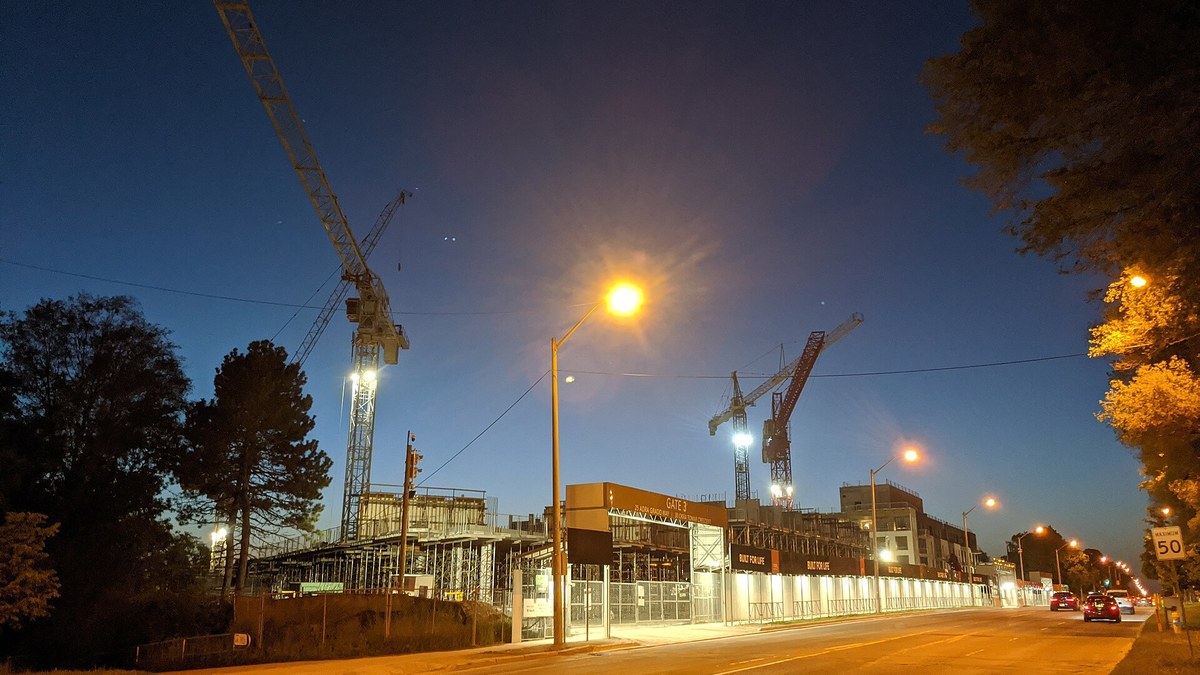
Photo: Scala condo under construction, Toronto, by Sikander Iqbal, via Wikimedia Commons (CC BY-SA 4.0). File photo from 2020, not taken this week.
If you tried to buy a home in Canada as a foreigner over the past four years, the door was shut — and it was supposed to stay shut until January 1, 2027, when the ban simply expired. Budget 2026, tabled on Thursday by Finance Minister François-Philippe Champagne, has changed the shape of that door entirely: the ban on existing homes will now run to January 1, 2029, but new homes would be open to foreign buyers.
The twist is the story: the government that introduced the ban in Budget 2022 to cool an overheated market now proposes to lift it for the exact segment — brand-new homes, mostly condos — where foreign money was most concentrated.
What the budget actually says
The proposal is one paragraph in Chapter 3 of Budget 2026, and it is worth quoting in full, because the wording is doing a lot of work: "Budget 2026 proposes to extend the ban on foreign purchases of existing residential properties for two years, to January 1, 2029, while exempting new residential properties." The government's stated reason: "This would help protect housing affordability by keeping the vast majority of the market available for Canadians, while unlocking additional investment in new housing supply."
The logic is the Australia model: keep the resale market — the vast majority of homes Canadians actually buy — closed to foreign buyers, and open new builds, where foreign capital can fund construction that would not otherwise happen. The Canadian Real Estate Association and the B.C. Real Estate Association have advocated this change, and the Canadian Home Builders' Association welcomed it. A condo tower typically needs about 70 per cent of its units pre-sold before a bank will finance it, according to CMHC — and foreign investors have historically been a large share of those early buyers.
Here is the part I have to say plainly, because the headlines will not: none of this is law yet. It is a budget proposal. No bill has been tabled, no regulations published, and the budget does not define what counts as a "new" home, when the exemption would start, or how presale contracts would be treated. The law on the books today still repeals itself on January 1, 2027, 56 days from now. Until Parliament passes a new law, the old rules apply as written, with no new-home exemption.
Why new builds, of all things
The irony is hard to miss. The 2020 property records that pushed Ottawa to create the ban showed foreign ownership concentrated in new condos — 11.2 per cent of Vancouver condos and 7.6 per cent of Toronto condos had at least one non-resident owner, according to Statistics Canada and CMHC. The segment the government now wants to reopen is the segment that sparked the ban.
Enjoyed this guide?
Canada Pulse is an independent publication. Every guide is researched, written and carefully edited, and kept free forever. If this saved you time or made your life easier, please don't let the effort go unnoticed — support our work with whatever you can, from $1 upward. Every dollar keeps the guides coming.
💛 Donate via PayPalOttawa's answer is that the market has changed since 2022: developers sit on unsold new inventory, starts are falling, and Build Canada Homes — now funded to $45 billion after a further $13 billion in this budget — needs private capital alongside public money. Marc Lee, senior economist at the Canadian Centre for Policy Alternatives, called the move a surprise and warned it will ultimately hurt affordability for new builds, because foreign demand pushes up the price of the very homes first-time buyers are supposed to graduate into.
The catch: it may not work in B.C. anyway
There is a second catch, and it matters most where foreign buying was always biggest. British Columbia's additional property transfer tax — 20 per cent of the fair market value of a foreign purchaser's interest — applies to new homes too, in Metro Vancouver, the Capital Regional District, the Fraser Valley, the Central Okanagan and Nanaimo. On a $1-million condo, that is $200,000 on top of the price. Unless B.C. changes its rules, the federal exemption may have limited practical effect where it was supposed to matter most — the BCREA says so itself.
What history says about this ban
Worth remembering, too: the original ban was barely three months old when Ottawa quietly inserted exemptions into it, 86 days after the law took effect. The new-home exemption may be the start of a wider loosening, or the final shape of the policy. The budget does not say.
For now, the practical advice is simple. If you are a Canadian buyer, nothing changes: resale stays closed to foreign buyers for two more years, and new builds may get more competition from abroad. If you are a foreign buyer eyeing a new condo, wait for the legislation — and check the provincial tax first, because in B.C. it dwarfs everything else. If you are a developer with unsold units, this is the first good news from Ottawa in a while, even if it arrives as a promise rather than a law.
Editor's note: I searched for a broadcast video from CBC, CTV or Global News explaining this specific Budget 2026 proposal and could not verify a reputable, embeddable one at publishing time — the written sources below, led by the budget text itself, cover the announcement in full.
Sources
- Better Dwelling — "Canada To Lift Ban On Foreign Buyers of New Homes For 'Affordability'" (November 7, 2026; quoting Budget 2026, Chapter 3)
- British Columbia Real Estate Association — "What the 2026 Federal Budget Could Mean for Housing in BC" (November 6, 2026)
- The Globe and Mail (via EuropeSays) — "Budget 2026: Housing commitments include tripling non-market options, new exemption to ban on foreign buyers" (November 6, 2026)
- Dan Marusin PREC — "Foreign Buyer Ban Canada: 2029 Extension, New Homes Exempt" (November 6, 2026; Budget 2026 Chapter 3, Annex 3 and Annex 4; Justice Laws Canada)
- Nesto — "Federal Budget Impact on Housing" (November 6, 2026; Budget 2026, Chapter 3 and Annex 1)
Enjoyed this guide?
Canada Pulse is an independent publication. Every guide is researched, written and carefully edited, and kept free forever. If this saved you time or made your life easier, please don't let the effort go unnoticed — support our work with whatever you can, from $1 upward. Every dollar keeps the guides coming.
💛 Donate via PayPal