Canada Budget Deficit Nearly Halves to $5.36 Billion — But the November 5 Budget Is the Real Test
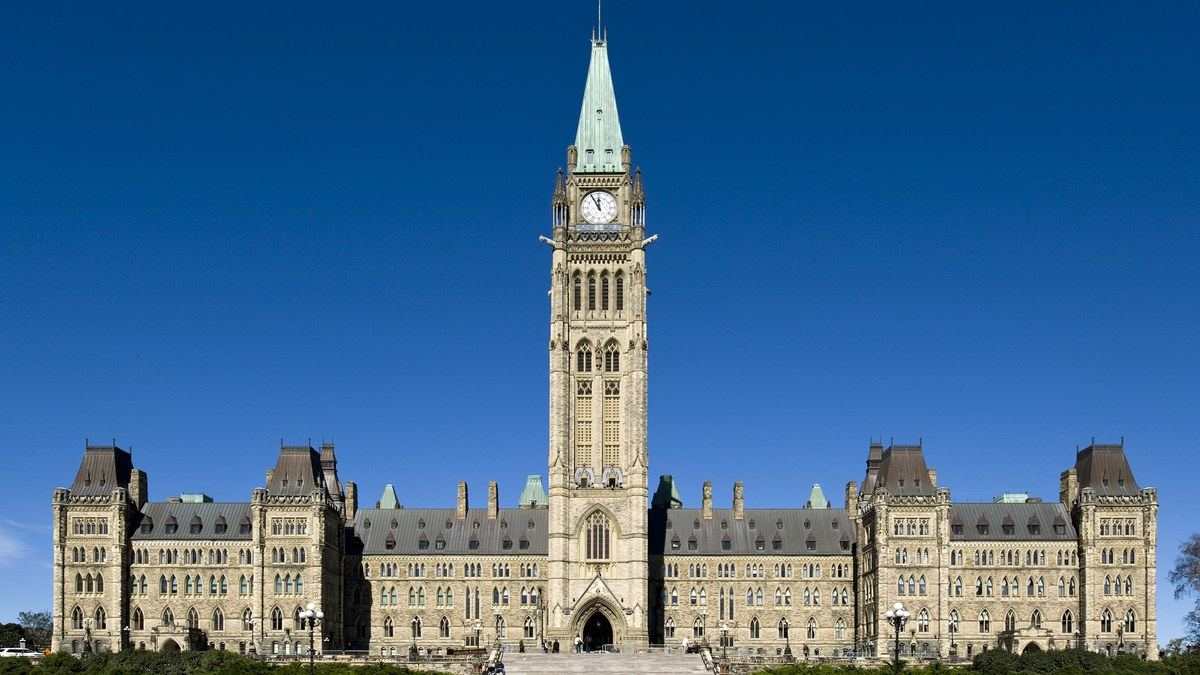
Photo: Saffron Blaze / Wikimedia Commons (CC BY-SA 3.0) — file photo of Centre Block on Parliament Hill in Ottawa, not from the October 30 fiscal update.
Five billion dollars still sounds like a lot of red ink. It is. But Ottawa's latest fiscal scorecard tells a story few Canadians expected this autumn: the federal deficit is running at less than half last year's pace, and August itself narrowed sharply.
According to Reuters, reporting on figures released by the finance ministry on Friday, October 30, Canada posted a budget deficit of C$5.36 billion — about US$3.84 billion — for the first five months of the 2026-27 fiscal year, April through August 2026. For the same stretch a year earlier, the shortfall was C$11.07 billion. The deficit has nearly halved, because money coming in grew faster than money going out.
Canada budget deficit October 2026: what the October 30 numbers actually say
Year-to-date revenues rose 7.1 per cent, according to the finance ministry figures cited by Reuters, with higher personal income tax and stronger GST receipts doing most of the lifting. Program expenses rose 4.7 per cent, driven by bigger transfers and higher operating costs. This is not Ottawa slashing spending to balance the books. Spending went up. Revenue just went up faster.
That distinction matters. A deficit that shrinks because tax receipts rise can reverse quickly if the economy cools; one that shrinks through spending cuts tends to stick. Canada is firmly in the first camp, and anyone reading these numbers as proof the fiscal fight is over is getting ahead of themselves.
The monthly picture is starker still. In August alone, the deficit was just C$233 million, according to Reuters, against C$3.28 billion in August 2025 — a swing of more than C$3 billion that explains most of the year-to-date improvement.
Where the money came from — and where it went in August
Zoom in on August and the mechanics get clearer. According to TradingView's report on the Finance Department's Fiscal Monitor, federal revenues hit C$40.07 billion in the month, up 7.1 per cent on higher income tax and GST receipts. Program expenses, excluding net actuarial losses and gains, came in at C$36.98 billion, up 3.1 per cent, mainly reflecting larger major transfers to individuals.
But a stubborn cost hides in the same release. Public debt charges — the interest Ottawa pays on past borrowing — climbed 16.1 per cent in August to C$5.12 billion, according to TradingView, driven by a pension and benefit actuarial adjustment and higher interest on marketable bonds, partly offset by lower inflation adjustments on Real Return Bonds. Even in a good month, servicing old debt eats a growing slice of the pie.
Enjoyed this guide?
Canada Pulse is an independent publication. Every guide is researched, written and carefully edited, and kept free forever. If this saved you time or made your life easier, please don't let the effort go unnoticed — support our work with whatever you can, from $1 upward. Every dollar keeps the guides coming.
💛 Donate via PayPalThe same release also recorded net actuarial gains of C$1.8 billion in August, against losses of C$0.7 billion a year earlier, reflecting updated pension and benefit plan valuations. Actuarial swings bounce around month to month and flatter the headline when they land on the positive side. Worth noting, not worth celebrating as a permanent win.
Why a five-month deficit is not a full-year forecast
Here is the part that deserves a pause. Canada's fiscal year runs to March 31, and federal deficits are famously lumpy. A strong summer says something real about revenue momentum, but almost nothing about how the year will end. The previous fiscal year is the proof: according to Reuters, the full-year 2025-26 deficit was C$55.28 billion, up from C$43.15 billion the year before, and March 2026 alone produced a C$29.7 billion monthly deficit, according to the Finance Department's Fiscal Monitor.
Official projections still point to a large annual shortfall: the spring update projected a 2026-27 deficit of $65.3 billion, according to Investment Executive, and the Parliamentary Budget Officer expects deficits above $63 billion a year for five years, according to its October outlook. The gap between a C$5.36 billion five-month tally and a $63-billion-plus annual forecast is not a contradiction. It is a snapshot versus a full year.
Public debt is still climbing too, up 9.1 per cent over the five months according to Reuters, on higher effective interest rates and a larger stock of marketable bonds.
What this means before the November 5 federal budget
All of this lands days before Finance Minister François-Philippe Champagne tables the federal budget on November 5. The October 30 numbers give the government a genuinely good talking point: revenues beating expectations, a deficit well below last year's pace. Expect to hear it in Ottawa this week.
What they do not give the government is a free pass. Debt charges are rising at double-digit rates, program spending is still climbing, and the full-year outlook remains deep in deficit territory. The honest read for households is narrower than any slogan: the books look healthier than a year ago, the improvement comes from tax revenue rather than spending restraint, and the real tests — the budget itself, then the March year-end reckoning — are still to come.
Editor's note: we searched for a verifiable video on this fiscal update from a reputable news outlet and could not confirm one at the time of writing, so no video is embedded here rather than risk linking to an unverified or partisan clip.
Sources
Reuters — "Canada's budget deficit over first five months of 2026/27 almost halves to C$5.36 billion" (October 30, 2026). TradingView News — "Canada Budget Shortfall Narrows Sharply in August" (October 30, 2026), reporting on the Department of Finance Canada Fiscal Monitor. Department of Finance Canada — The Fiscal Monitor, March 2026. Investment Executive — reporting on the 2026 spring economic update deficit projection. Parliamentary Budget Office — October 2026 economic and fiscal outlook, as reported.
Enjoyed this guide?
Canada Pulse is an independent publication. Every guide is researched, written and carefully edited, and kept free forever. If this saved you time or made your life easier, please don't let the effort go unnoticed — support our work with whatever you can, from $1 upward. Every dollar keeps the guides coming.
💛 Donate via PayPal