Canada Debt Clock: Poilievre's Budget Demands as $1.3 Trillion Debt Ticks Up $2,000 a Second
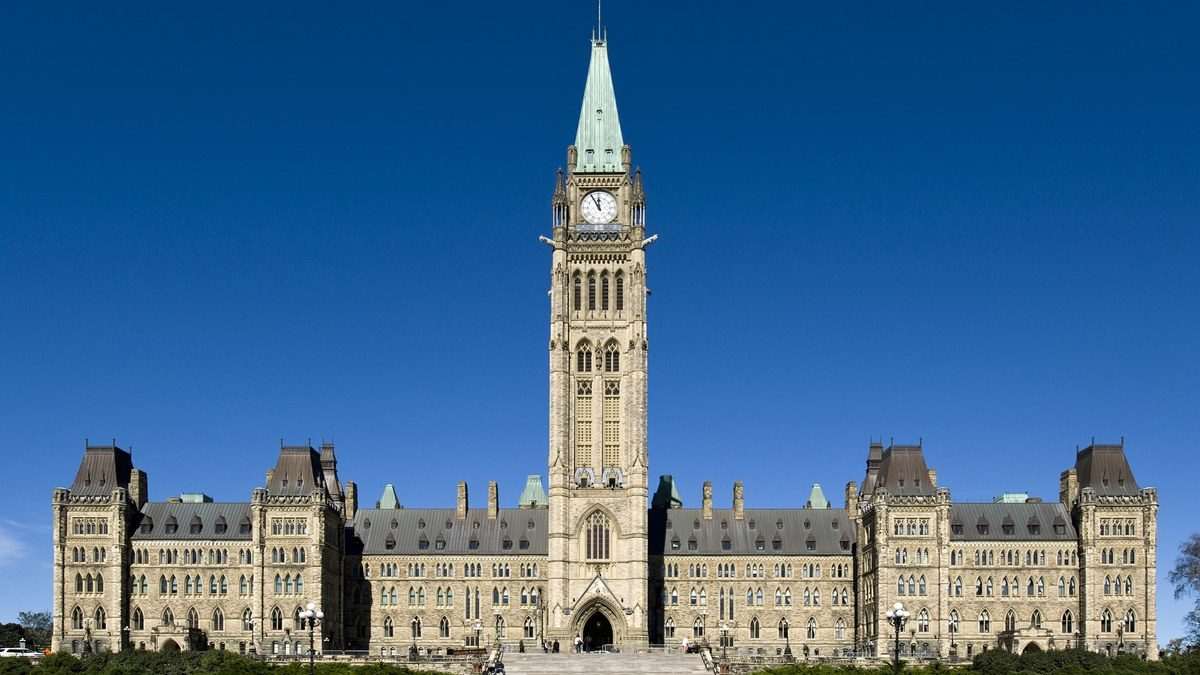
File photo: Centre Block on Parliament Hill in Ottawa. This is not a photo of the debt-clock truck or the November 1 press conference. Photo: Ken Lund / Wikimedia Commons (CC BY-SA 2.0).
There is a truck parked near Parliament Hill right now with a number on its side that never sits still. Every second, it ticks up by roughly $2,000. That is the Canadian Taxpayers Federation's debt clock, rolled out in Ottawa days before the federal budget: according to the federation, Canada's federal debt has now passed $1.3 trillion, growing by about $179 million a day.
This one lands differently because the budget arrives on Thursday, November 5 — and the fight over it has already started in public, with a truck, a letter, and a press conference staged in front of the clock.
What the debt clock actually says
Let's get the federation's numbers straight, because they are the ones driving the headlines. According to the Canadian Taxpayers Federation, each Canadian's share of the federal debt now stands at about $32,700. Interest charges alone will cost taxpayers $58.7 billion this year, the group says — more than the $57.4 billion Ottawa will send provinces in health transfers, and more than the $53.4 billion it will collect through the GST.
The federation's federal director, Franco Terrazzano, put it bluntly: every dollar Canadians pay in federal sales tax is going to pay interest on the debt. The group also notes the fiscal update's spending figure — $594.8 billion in 2026-27, $6.5 billion above the last budget's $588.3 billion forecast — and $65 billion in borrowing this year, pushing the debt to roughly $1.4 trillion by year-end.
Those are advocacy-group numbers built on government projections, not an audited statement. What gives the story weight is that the independent watchdog's deficit figures point in a similar direction.
Poilievre's demands: fuel taxes, spending cuts, and the anchors
On November 1, Conservative Leader Pierre Poilievre held a news conference in Ottawa in front of the debt clock, joined by Conservative MP Michael Chong and Terrazzano. A day later, on November 2, he published a letter to Prime Minister Mark Carney setting out what he wants in the November 5 budget.
First, cut what Poilievre calls wasteful, inflationary spending — bureaucracy, consultants, corporate handouts, wasteful foreign aid — and cancel the $150-billion ALTO high-speed rail project, which the letter claims would save almost $200 billion over the coming years.
Enjoyed this guide?
Canada Pulse is an independent publication. Every guide is researched, written and carefully edited, and kept free forever. If this saved you time or made your life easier, please don't let the effort go unnoticed — support our work with whatever you can, from $1 upward. Every dollar keeps the guides coming.
💛 Donate via PayPalSecond, Poilievre demands Carney keep both fiscal anchors he promised: lowering the debt-to-GDP ratio and lowering the deficit-to-GDP ratio. In the letter, he calls keeping those promises the bare minimum, and argues the budget should move toward balance over time.
Third comes the pocketbook pitch. Poilievre wants the GST on fuel suspended until summer and the federal fuel standard scrapped permanently. His letter cites the Nova Scotia Energy Board for the claim that the fuel standard adds 15 cents a litre, arguing the saving would reach groceries, not just the gas pump.
What the budget watchdog says
Here is where the argument gets harder for the government to brush off. According to The Canadian Press, the Parliamentary Budget Officer expects a $63.3-billion deficit in 2026-27 — down from a $71.8-billion June forecast — peaking at $70.2 billion the next year.
The same watchdog, according to The Canadian Press, has predicted the government will not meet its fiscal anchor of a declining deficit-to-GDP ratio, expecting that measure to rise in 2027-28 and again in 2029-30.
Poilievre's letter also leans on the cost-of-living numbers. Inflation rose again to 3.1 per cent in September, the letter notes, and it cites 2.35 million food bank visits in a single month — the highest in Canadian history, up 9 per cent on last year and 117 per cent since 2019. Those food-bank figures come from the Conservative letter; the inflation figure is the official September reading it cites.
What to watch on Thursday
So what matters when Champagne stands up on November 5? Three numbers will tell you who won this argument: the deficit for 2026-27, against the watchdog's $63.3 billion; the debt and deficit ratios, falling as promised or rising as the watchdog expects; and fuel taxes — does anything change at the pump, or does the GST suspension idea die on arrival?
The government frames it differently. According to The Canadian Press, Champagne has said the budget will “outline the next steps in our plan to build a stronger, more resilient and more affordable Canada.” That is the case Carney's team will make on Thursday: that borrowing is buying investment, jobs, and affordability, not waste.
Forget either side's slogans and watch those three numbers. A debt clock makes a great photo, but only the budget decides what your paycheque is worth next year.
Sources
- Conservative Party of Canada — Poilievre's letter to Prime Minister Carney, “Save Canadians Money”
- Canadian Taxpayers Federation newsroom — budget-update statement on spending, borrowing and debt interest
- The Canadian Press (via National Newswatch) — Poilievre's budget demands, Parliamentary Budget Officer deficit forecasts
- Canada Free Press report — debt clock deployment outside Parliament Hill, $1.3 trillion debt, $2,000 per second
Enjoyed this guide?
Canada Pulse is an independent publication. Every guide is researched, written and carefully edited, and kept free forever. If this saved you time or made your life easier, please don't let the effort go unnoticed — support our work with whatever you can, from $1 upward. Every dollar keeps the guides coming.
💛 Donate via PayPal